The CRM for real estate teams that follow up for 18 months
Every lead gets a long-tail cadence, and the hot ones reach an agent while the buyer is still on the page.
Want to see it first? Book a demo
- Unlimited seats
- Your own database
- AI waits for your approval
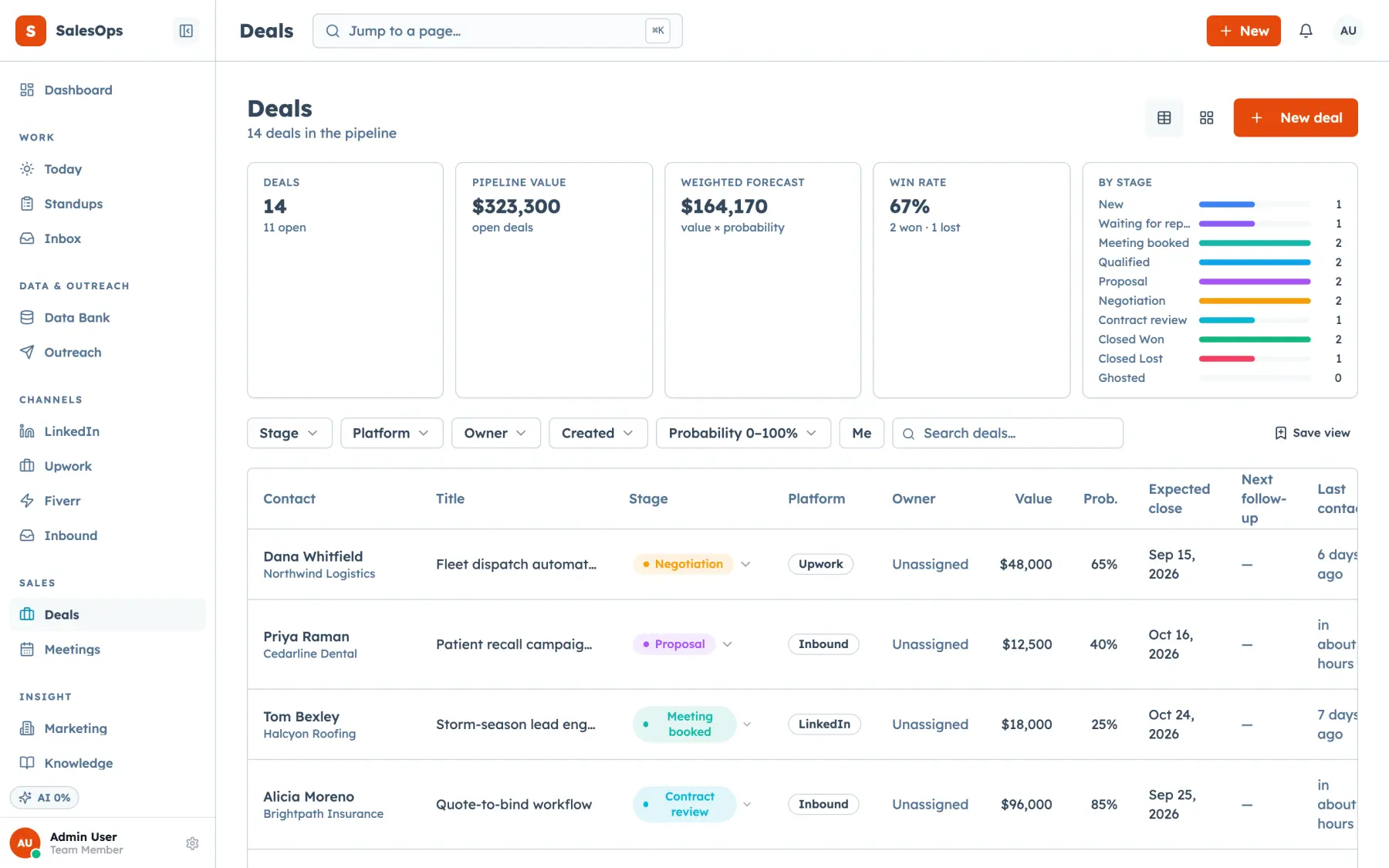
Two numbers decide a real estate team's year. The first is how long it takes to reach a portal lead, measured in minutes. The second is how long the team keeps contacting the ones who are not ready, measured in months. Most teams are decent at neither, because the tools they buy are strong on one and weak on the other. SalesCrew is configured for both ends of that curve, and it does not touch the MLS.
A week on a team with four agents and an ISA
Three things every team lead recognises, and what gets configured for each.
Portal leads sit unanswered while everyone is showing
A Zillow or Realtor.com enquiry arrives at 2:15pm. Your agents are in cars and in houses. The buyer has already filled in three other forms. Configure the inbound webhook so the lead lands as a record the moment it arrives, with an assignment rule and an untouched-lead timer that escalates instead of waiting for someone to notice.
The 14-month buyer gets dropped in week three
An internet lead is rarely a buyer this quarter. Someone browsing listings in February may buy the following spring, and most follow-up systems give up long before then. Configure a nurture cadence measured in months rather than days, with monthly touches that pause on any reply and resume when the conversation goes quiet again.
Past clients hear from you when you want a referral
The database of everyone you ever closed is the cheapest pipeline a team has, and it is usually a spreadsheet nobody opens. Configure a segment on closing date and an anniversary cadence, so the touch happens on the calendar rather than the week the pipeline goes thin.
The team is the reason a normal CRM breaks here
Most real estate teams are not one person with a pipeline. There is a team lead who owns the numbers, an inside sales agent whose whole job is speed and qualification, buyer agents who want their own leads and nobody else's, and a transaction coordinator who takes over once a contract exists. That structure decides how the record has to be built.
The routing question is the sharp one. When a lead is qualified by the ISA it has to reach a buyer agent, in an order everyone agreed to in advance, or the argument about who got which lead poisons the whole system. SalesCrew runs round-robin assignment pools in the order your team agreed, and an untouched-lead timer escalates and reassigns a lead nobody picked up. The record shows who owns the lead and when they last touched it, so the rotation is never argued about.
Access is the other half. SalesCrew uses a three-axis model (channel, profile, area), so a buyer agent sees their own leads, the ISA sees every new enquiry, and the team lead sees the whole board with source on every record. Seats are unlimited, so nobody is left out to save a licence fee, which is the usual reason a team's data is incomplete.
What we configure for you
Not an empty CRM and a help centre. A working setup for a residential team, inside the first 14 days.
- 1
Pipeline stages
Two pipelines, because buyers and sellers do not move the same way. Buyer: New lead, Contacted, Qualified, Showing, Offer, Under contract, Closed. Seller: Enquiry, Valuation booked, Listing appointment, Listed, Under contract, Closed.
- 2
Channels
Your team mailbox connected over IMAP, portal and site enquiries posting to the inbound webhook with source recorded, Calendly showing and valuation bookings landing as meetings, and the LinkedIn queue for the agent-to-agent and investor side.
- 3
Cadences
A day-one speed sequence, a twelve-to-eighteen month nurture with monthly touches, a post-showing follow-up, a sphere-of-influence cadence, and an anniversary cadence keyed to closing date.
- 4
Agent policy
The Inbox agent set to review, so it drafts an answer to "is this one still available" and a person presses send. Guardrails hold sends to business hours and cap touches per contact at three days apart.
- 5
Knowledge-base voice
Your farm areas, your brokerage name and licence line, your commission and buyer-agreement language, and your lender partners loaded as knowledge, so a draft never states a term you did not approve.
Your stack, and what sits beside it
The MLS and your transaction system stay where they are. Read this row by row.
| What you run | What it keeps | What SalesCrew adds |
|---|---|---|
| Follow Up Boss | Lead routing, the agent app, calling and texting built for this trade | Unlimited seats, cold outbound beside inbound, and your data in a database you can dump |
| kvCORE / BoldTrail | The IDX website, the consumer app, behavioural alerts on listing activity | A pipeline you configure, cold outbound to expired and FSBO lists, and the whole funnel in one database |
| Lofty | IDX site, dialler, ad campaigns aimed at buyer lead capture | Cadences that keep running for eighteen months and stop on a reply, plus your data in a database you can dump |
| The MLS | Listings, comps, status changes, the data your licence gives you access to | MLS data stays in your MLS |
| Dotloop / SkySlope | Contracts, signatures, compliance packets after a deal is written | The stages before the contract, and the anniversary follow-up years after it |
| Zillow, Realtor.com, Homes.com | The portal enquiry and its own lead inbox | The lead lands in your pipeline with its source, by webhook or CSV, so cost per closing by portal is a query |
Connections to the tools above run through webhooks, CSV import and the API. A portal enquiry lands as a lead with its source the moment the webhook fires.
SalesCrew beside your real estate platform
A configurable CRM (SalesCrew)
- Buyer and seller pipelines with stages you set, not a fixed template for someone else's team
- Long nurtures that run for a year or more and pause the second a lead replies
- Unlimited seats, so the ISA, four buyer agents and the coordinator cost nothing extra
- One Postgres database per team, exportable whenever you ask, which matters when agents move
The real estate platform (Follow Up Boss, kvCORE, Lofty)
- Built for this trade, with lead routing, texting and a dialler working on day one
- An IDX site and behavioural alerts that tell an agent which listing a lead just viewed
- Portal connectors built around the big listing sites
- An agent phone app your team will actually open between showings
Speed to lead, and the call an agent cannot take
The call pattern in this trade is unlike any other on this site. Nobody phones a real estate team at 3am. What happens instead is that a portal lead arrives during working hours and the only people who could respond are physically inside somebody else's house. The lead is not missed because the office is closed. It is missed because the office is a car.
That is why the first message matters more than the first call. SalesCrew captures the portal enquiry and the site form the moment they arrive, writes the lead with its source, drafts a first reply through the Inbox agent for a person to approve, and books showings through Calendly. Outbound calls run through Vapi.
The speed-to-lead pack adds a text back within a minute of the enquiry, a round-robin that rings three agents in order, and an AI receptionist that books the viewing while you're mid-showing.
Two constraints to plan around now. Consumer mobile numbers are covered by the TCPA, and lists of expired listings and for-sale-by-owner sellers are the classic place teams get this wrong, because the number was published for a different purpose. Scrubbing against the national and state do-not-call registries before you dial is your obligation. Separately, states generally require a licensee to identify their brokerage in advertising, and the form of that disclosure varies, so check the rules where you are licensed and keep your licence line in your templates. SalesCrew enforces suppression and opt-out on every send. This is not legal advice.
Where this gets used
Three jobs a team does every week, described as mechanism.
Working a new portal lead
The enquiry hits the inbound webhook and becomes a lead with source, property and timeline fields. An assignment rule puts it on an agent, an escalation task fires if nobody has touched it, and the Inbox agent drafts the first reply for approval.
Running an eighteen-month nurture
A lead who says "maybe next spring" moves to a long cadence with monthly steps. Any reply pauses it and lands in the shared inbox. Suppression is applied when the audience is frozen, so an unsubscribed contact never re-enters.
Working the sphere every January
A segment on closing date finds everyone who bought through you in a given year. An anniversary cadence goes out, the replies come back to one inbox, and every touch is logged against the contact so you can see which relationships produce referrals.
What team leads ask first
- We already use Follow Up Boss. Why would we move?
- Teams move for four reasons. Seats are unlimited on every tier. Cold outbound to expired and FSBO lists sits in the same database as your inbound. The pipeline is yours to reshape. And the whole CRM runs from Claude or ChatGPT over MCP.
- Does it connect to the MLS?
- SalesCrew holds people, conversations and deals. Listing search stays in your IDX site or your MLS portal. MLS access is governed by your board's rules and IDX agreements, so listing data stays where your licence puts it.
- How do leads get split between agents?
- By an assignment rule you configure, with the record showing who owns the lead and when they last touched it. Round-robin pools share new leads in the agreed order, and a timer reassigns a lead nobody has touched.
- What happens in the first minute after a portal enquiry?
- The lead is created the moment the webhook fires, with its source and property. The assignment and escalation tasks exist immediately. The Inbox agent drafts the first email reply for a person to approve.
- What happens to our database when an agent leaves the team?
- The contacts stay in your database, because the database is yours. Access is scoped on three axes, so revoking a departing agent's access is a permission change, not a data migration. If you leave SalesCrew entirely you take a full Postgres dump plus CSVs; your instance is a separate project, it goes read-only with export available, and a person deprovisions it after 90 days.
- What does it cost for a team of six?
- The same as a team of two, because seats are unlimited on every tier. Core is $299 a month, Outbound is $699 and Agency is $1,200. The meter is AI calls, with an allowance and a hard stop at the cap; manual work never stops when the allowance runs out. The trial is 14 days and a card is required to start it.
Which tier fits a real estate team
Core for the pipeline and the nurture. Outbound for the phone pack.
Core at $299 a month covers both pipelines, the shared inbox, email cadences and the data bank, with unlimited seats for agents and the ISA. Outbound at $699 adds phone numbers, SMS, missed-call text-back, speed-to-lead pools and showing reminders, plus the sender pool and the campaign agent that teams running expired and FSBO outbound rely on.
Start with the leads that went quiet in March
Import last year's dead portal leads on day two, and watch the first long nurture line up in review.
Want to see it first? Book a demo