Best CRMs for startups
An early-stage team's process changes fast. Compared on how quickly each one gets set up and how much it costs before your process settles down.
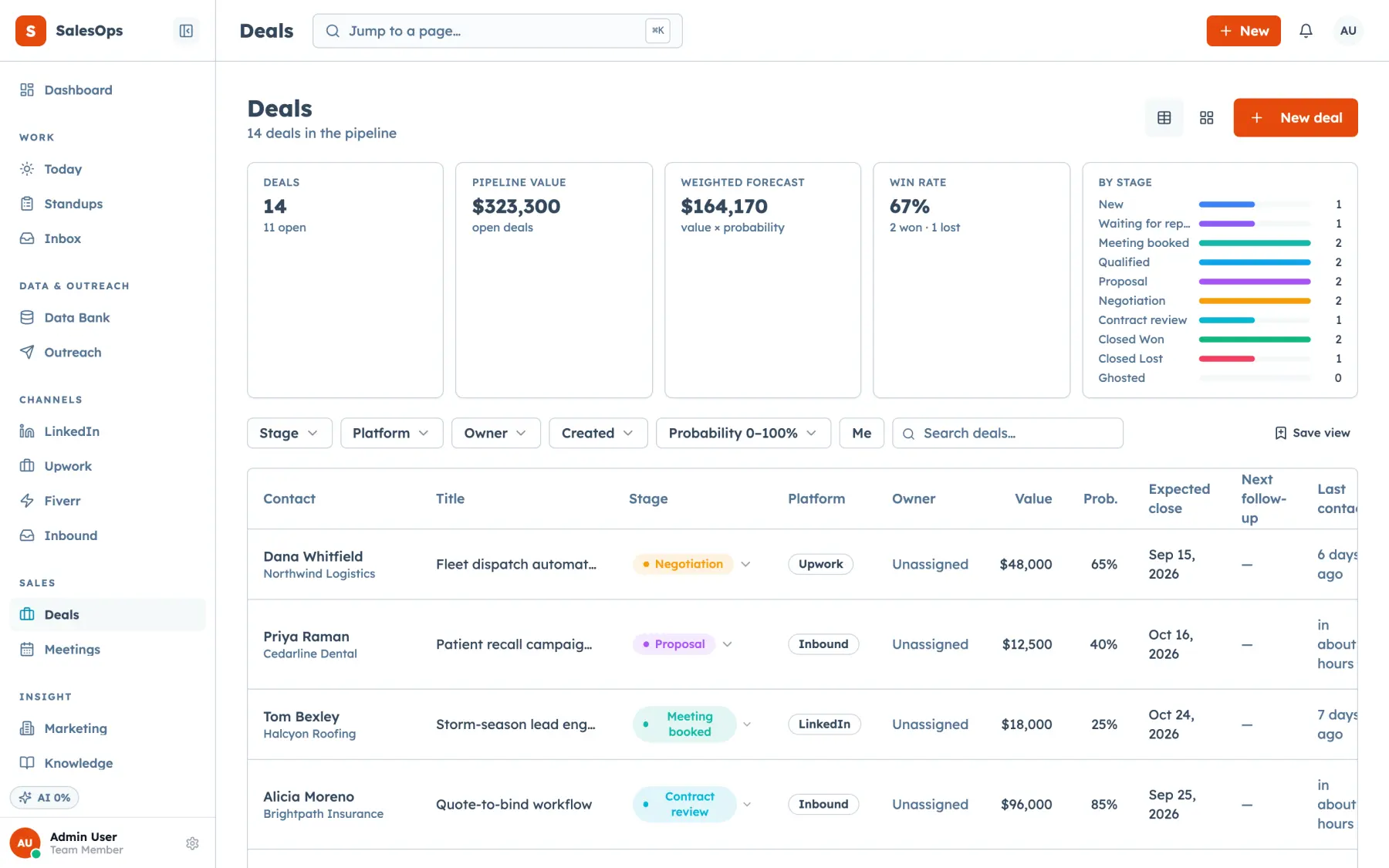
Attio wins for most early-stage startups: a genuinely capable free plan with AI features and an MCP server, and a flexible data model that adapts as your process changes. Close wins instead for a startup whose founder-led sales motion is built around cold outbound and calling specifically.
The short answer
- Attio's free plan covers up to 3 seats and 50,000 records with AI features and an MCP server included, per attio.com/pricing, enough for most startups through their first sales hires.
- Close starts at $9/user/month (Solo, annual) with a built-in AI prospecting agent on every tier, but caps the Solo plan at 1 user, per close.com/pricing.
- Airtable's free plan lets a team build a fully custom pipeline structure with no CRM-specific feature set imposed, and it charges only for users with edit permissions, per airtable.com/pricing.
Startup CRM options compared
| CRM | Starting price | Structure | MCP/API | Best for | Not for |
|---|---|---|---|---|---|
| Attio | Free (up to 3 seats) | Flexible, purpose-built CRM data model | MCP server on every tier including free | Most early-stage teams wanting a real CRM without early cost | A team that specifically needs a founder-led outbound dialer |
| Close | $9/user/mo (Solo, annual) | Purpose-built for outbound sales | Official MCP server, 36 tools | A founder running cold calling and email outbound directly | A team of 2+ that needs more than 1 seat on the entry plan |
| Airtable | Free ($0) | Build-your-own, no imposed CRM structure | Official MCP server, ~25 tools, all plans | A team whose process isn't settled and wants full flexibility | A team that wants deal-stage and forecasting built in, not built by hand |
Figures checked on attio.com/pricing, close.com/pricing and airtable.com/pricing, September 2026.
How each one fits early-stage reality
Attio
The most balanced option for a startup: a purpose-built CRM structure, not a blank database, but flexible enough to reshape as your process changes, with AI features and MCP access available from day one at no cost. Not for: a team whose primary motion is cold calling, where Close's dedicated dialer tools go further.
Close
Built specifically for outbound: Power Dialer and Predictive Dialer features, a built-in AI prospecting agent on every tier, and native SMS. A strong fit if your startup's growth engine is founder-led cold outreach rather than inbound or partnerships. Not for: a team of more than one on the entry Solo plan, which caps hard at 1 user.
Airtable
No CRM-specific features imposed on you: you build the pipeline, the stages, and the views yourself, which is genuinely useful when your sales process is still being figured out and a rigid tool would fight you. The tradeoff is that you're building what a purpose-built CRM would give you out of the box. Not for: a team that wants deal probability, weighted forecasting, or cadences without configuring them from scratch.
When none of these is the answer
A pre-revenue startup with a handful of early conversations doesn't need a CRM at all yet. A shared spreadsheet or even a running doc of conversations covers that stage, and setting up any of these tools before you have a repeatable process to track is premature structure.
Disclosure: SalesCrew is our product. It's built for a team running outbound at real volume with a full pipeline, cadences and an inbox, priced from $299/month, which is more than most pre-seed startups need on day one. It's not included in the ranking above because this comparison focuses on the lightest, cheapest options for the earliest stage.
Questions
- What CRM do most early-stage startups actually start with?
- There's no single answer, but a lightweight, fast-to-set-up tool tends to win early, since a startup's process changes often in the first year. Attio and Airtable both let you reshape the data model quickly, which matters more early on than deep feature depth.
- Is Airtable really a CRM, or just a flexible database?
- It's the latter, used as the former. Airtable has no purpose-built pipeline or deal-stage features; you build that structure yourself on top of its table-and-view system. That flexibility is a real advantage for a startup whose process isn't settled yet, and a real limitation once you need built-in sales-specific features.
- When should a startup upgrade from a free CRM plan?
- Usually when you hit a seat or record cap, or need a feature the free tier withholds, like an API. Attio's free plan caps at 3 seats and 50,000 records, which most startups outgrow around their first few sales hires.
- Does a startup need an MCP server or AI agent access on day one?
- Not usually, but it doesn't cost anything to have it available. Attio includes its MCP server on the free plan, so a startup can start experimenting with AI-agent access to their CRM without a separate decision to pay for it.