The CRM for studios where the lead is a free class
A trial visitor is a lead with a two-week window. Membership is the sale, and month three is when you lose it.
Want to see it first? Book a demo
- Unlimited seats
- Your own database
- AI waits for your approval
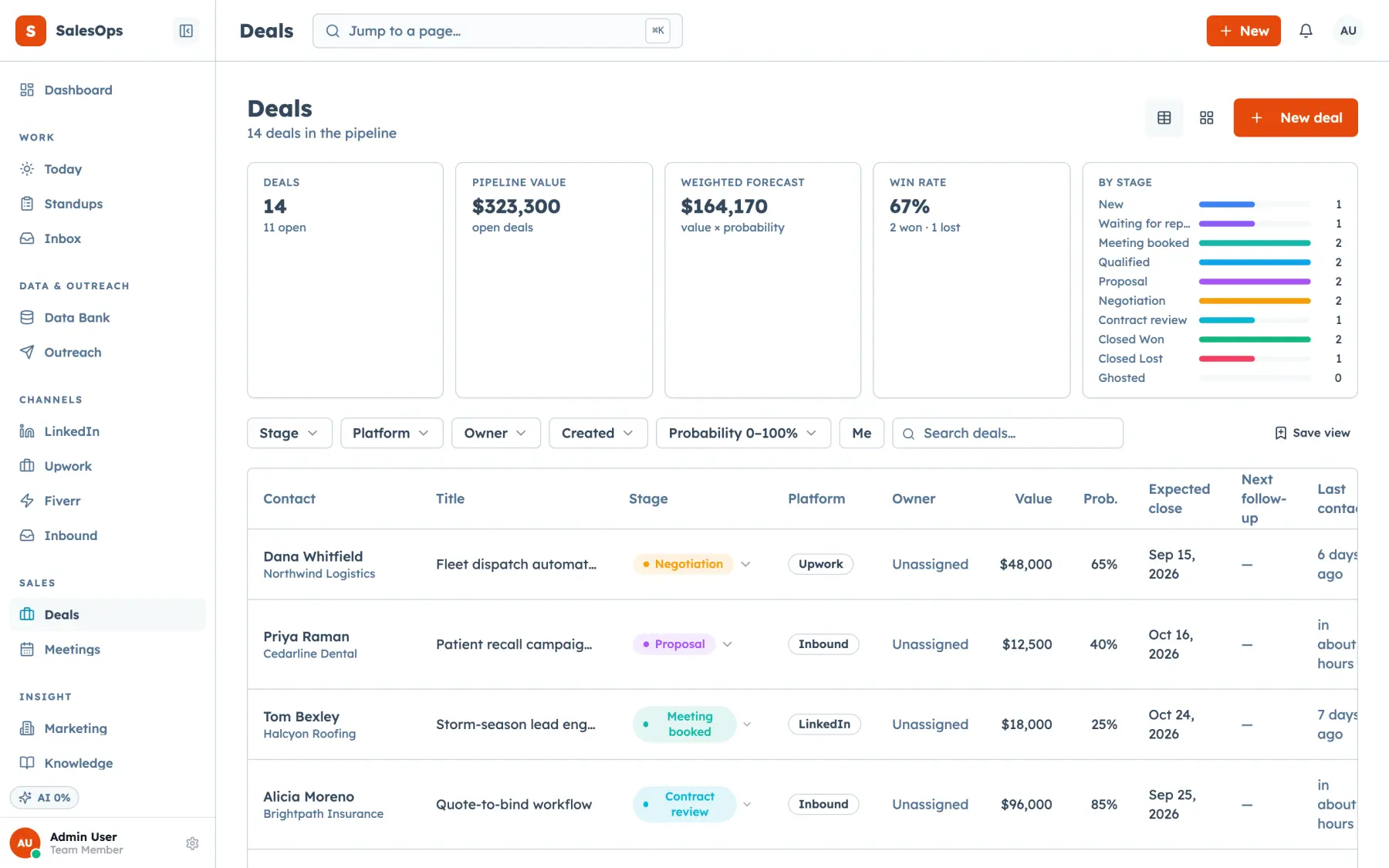
This business has two moments that decide the year and neither of them lives in a booking system. The first is the week after a trial class, when a visitor either becomes a member or disappears. The second is around month three, when a member stops turning up before they cancel. Your class booking software owns the schedule. SalesCrew owns those two windows.
A week in a studio office
Three patterns owners recognise, and what gets configured for each.
The trial visitor leaves and nothing happens
Somebody books a free class, comes once, has a good time and hears nothing again. The window in which they would have joined is days, not weeks. Configure trial-to-membership as a pipeline with stages, and a cadence that runs inside that window rather than in a monthly newsletter.
Attendance drops before the cancellation does
The strongest signal of churn in this business is a member who has stopped booking classes, and it appears weeks before they cancel. Configure a segment on attendance gaps, fed from your booking system by CSV or webhook, and a check-in cadence that reaches them while they are still a member.
Class passes expire unused and the customer resents it
A ten-class pack bought in January with four classes left in June is a customer who feels they wasted money. Configure a segment on unused pack balance and a nudge before expiry, which is cheaper than winning back someone who felt short-changed.
Who is buying, and who is typing
The buyer is the studio owner. The people typing are front desk staff and instructors who cover the desk between classes, which means the interface has to survive being used in five-minute gaps by people who did not attend a training session.
Staff turnover in this sector is high, particularly among part-time desk cover. That is the argument for putting the follow-up in cadences rather than in a person's routine: a documented sequence survives a departure, and a habit does not.
Seats are unlimited on every tier, which matters when a studio has eight instructors who each cover the desk occasionally.
What we configure for you
A working setup for a boutique studio or an independent gym.
- 1
Pipeline
Enquiry, trial booked, trial attended, offer made, member. Trial attended is a separate stage from trial booked because the gap between those two is itself a problem worth seeing.
- 2
Segments
Trials attended with no membership after seven days, members with a widening gap in attendance, packs with an unused balance near expiry, and cancelled members past ninety days.
- 3
Cadences
A trial-to-membership cadence measured in days, a check-in cadence for attendance drops that reads as care rather than sales, a pack-expiry nudge, and a win-back for cancelled members.
- 4
Channels
The studio mailbox over IMAP, the website enquiry form pointed at the inbound endpoint, and the trial class booking landing as a meeting with its source recorded.
- 5
Knowledge base
Your class types and what a beginner should start with, your membership tiers and their terms, your cancellation and freeze policy, so drafts state your actual terms.
Your stack, and what sits beside it
The booking platform keeps the schedule and the door.
| What you run | What it keeps | What SalesCrew adds |
|---|---|---|
| Mindbody | Class schedule, bookings, memberships, payments | The trial-to-membership pipeline and the attendance-drop segment |
| Mariana Tek | Spot booking, memberships, the member app | Follow-up cadences in the days after a trial class |
| Glofox | Bookings, memberships, payments for studios | A pipeline with stages, and a win-back cadence for cancelled members |
| Zen Planner | Membership management, scheduling, billing | Pack-expiry nudges and a lead source on every enquiry |
| Your payment processor | Membership billing and dunning | Stays with your payment processor |
| Instagram and Meta ads | Where a lot of studio leads come from | Ad spend collected read-only beside the leads, so cost per trial by channel is a query |
Connections run through webhooks, CSV import and the API. Attendance data comes across as an export or a webhook you configure.
What each system is built for
A configurable CRM (SalesCrew)
- Trial to membership as a pipeline with stages, not a list of names
- Attendance drops become a worked segment before someone cancels
- Unlimited seats, so every instructor covering the desk has a login
- One Postgres database per studio, exportable whenever you want it
The class booking platform
- Schedules, spot booking and the member app your customers already use
- Membership billing, freezes and dunning built in
- Check-in at the door and attendance data at source
- Member texting from the platform your members already know
The front desk, and where the enquiries actually arrive
The distinctive channel problem in this trade is that a large share of enquiries arrive as Instagram direct messages rather than as calls or forms. A prospective member watches a class clip, messages the studio account, and expects an answer the way they would from a friend.
SalesCrew brings Instagram direct messages into the same thread list as email, and the enquiry form linked from your profile lands as a lead with its source. The trial cadence picks up both. Meta ad spend sits beside those leads, so cost per trial class by campaign is a query.
The phone is a smaller problem here than in the trades, but it is real during class times when nobody is at the desk. The AI front desk answers during class and books a trial, and a missed call gets a text back. Forms and bookings are captured around the clock with the arrival time recorded, so you can see how much enquiry volume lands while a class is running.
Two constraints to plan around now. Members are consumers, so TCPA obligations attach to marketing texts and calls to their mobiles, and consent has to be recorded. Separately, automatic renewal and cancellation terms for memberships are regulated in a number of jurisdictions and the rules differ; check what applies where you operate before writing renewal messaging. SalesCrew enforces suppression and opt-out; the rest is yours, and this is not legal advice.
Where this gets used
Three jobs a studio does every week, described as mechanism.
Converting a trial class
The visitor moves to trial attended when they turn up. A cadence measured in days offers membership, pauses on any reply, and the reply lands in the shared inbox with the record beside it.
Reaching a member who stopped coming
Attendance data arrives by export or webhook. A widening gap puts the member in a segment, and a check-in cadence goes out while they still have a membership to keep.
Nudging an expiring pack
A segment on unused balance and expiry date drives one message before the deadline. Suppression is applied at freeze, so anyone who opted out never receives it.
What studio owners ask first
- We use Mindbody. Does this replace it?
- No. Keep Mindbody for your schedule, your bookings and your billing. SalesCrew runs the trial-to-membership follow-up and the churn window, as a pipeline with an owner on every trial.
- Can we see which ads bring paying members?
- Yes. Meta and Google ad spend is collected read-only beside the leads, and each trial carries its source. Cost per trial and cost per member by campaign are queries on the same database.
- How does attendance data get in?
- By CSV export or a webhook you configure from your booking platform. Members whose visits drop land in a segment, and the win-back cadence works that list.
- Will instructors have to use it?
- Only whoever covers the front desk, and only for the enquiry list. Seats are unlimited, so every instructor who covers the desk can have a login.
- How does a trial visitor hear from us the next day?
- The trial cadence sends the first email the next morning and stops the moment the visitor replies or books. Every external send starts in review, with a person approving it.
- What does it cost?
- Core is $299 a month, Outbound is $699 and Agency is $1,200, with unlimited seats on every tier and a 14-day trial that requires a card.
Which tier fits a studio
Core covers both windows that matter here.
Core at $299 a month covers the pipeline, the segments, email cadences and the shared inbox, with unlimited seats. Outbound at $699 adds the phone and SMS pack, so class reminders and the missed-call text-back run from the same record.
Start the trial with last month's trial classes
Import the list on day two and count how many were ever followed up.
Want to see it first? Book a demo