How do you run a customer reactivation campaign?
Segment dormant customers by why they likely went quiet. Use messaging that fits a past relationship rather than a cold pitch. Always suppress anyone who already opted out.
The short answer
- A reactivation campaign works better segmented by likely reason for going dormant: price sensitivity, a bad past experience, simply forgetting. One blanket offer to everyone ignores that the reasons call for different messages.
- Reactivation messaging should read differently from cold outreach. The recipient has an existing history with the business. A generic cold-prospecting message ignores that context and feels impersonal to a past customer.
- Anyone who explicitly unsubscribed or opted out must be excluded from a reactivation list entirely, however long ago that happened. A win-back attempt that overrides a stated preference undermines the whole suppression system.
- Set dormancy thresholds relative to your own typical purchase or engagement cycle, not a fixed universal number. 'Gone quiet' looks different for a monthly service than for an annual purchase.
Why one blanket offer underperforms a segmented approach
The simplest version of reactivation is a single discount email sent to everyone who has not engaged in some period. It is easy to set up, and it does recover some share of dormant customers. But it treats every reason for going quiet the same way. A customer who stopped engaging because of price responds differently from one who had a bad experience. Both respond differently from someone who got busy and forgot the relationship existed. A single generic offer speaks to none of these situations well.
Segmenting by likely reason, even roughly, from whatever signals exist, past support tickets, engagement history, stated feedback, allows messaging that matches the situation. A genuine check-in for someone who drifted away. An acknowledgment and a fix offer for someone who had a bad experience. A value-focused message rather than a discount for someone who was never price-sensitive.
Segmenting a reactivation list
| Likely reason for dormancy | Messaging approach |
|---|---|
| Simply drifted away, no bad signal | A genuine check-in, remind them what they are missing |
| Had a negative experience | Acknowledge it directly, offer a specific fix or improvement |
| Price-sensitive | A relevant offer, but not necessarily the default approach for everyone |
| Explicitly opted out or unsubscribed | Exclude entirely, never include in reactivation |
What to set up
Pull your dormant list and segment it by whatever real signal exists about why each contact went quiet. Even a rough categorization is better than none. Write distinct messaging for each segment rather than one blanket message. Cross-check the whole list against your suppression list before sending anything. Exclude anyone who opted out, however long ago.
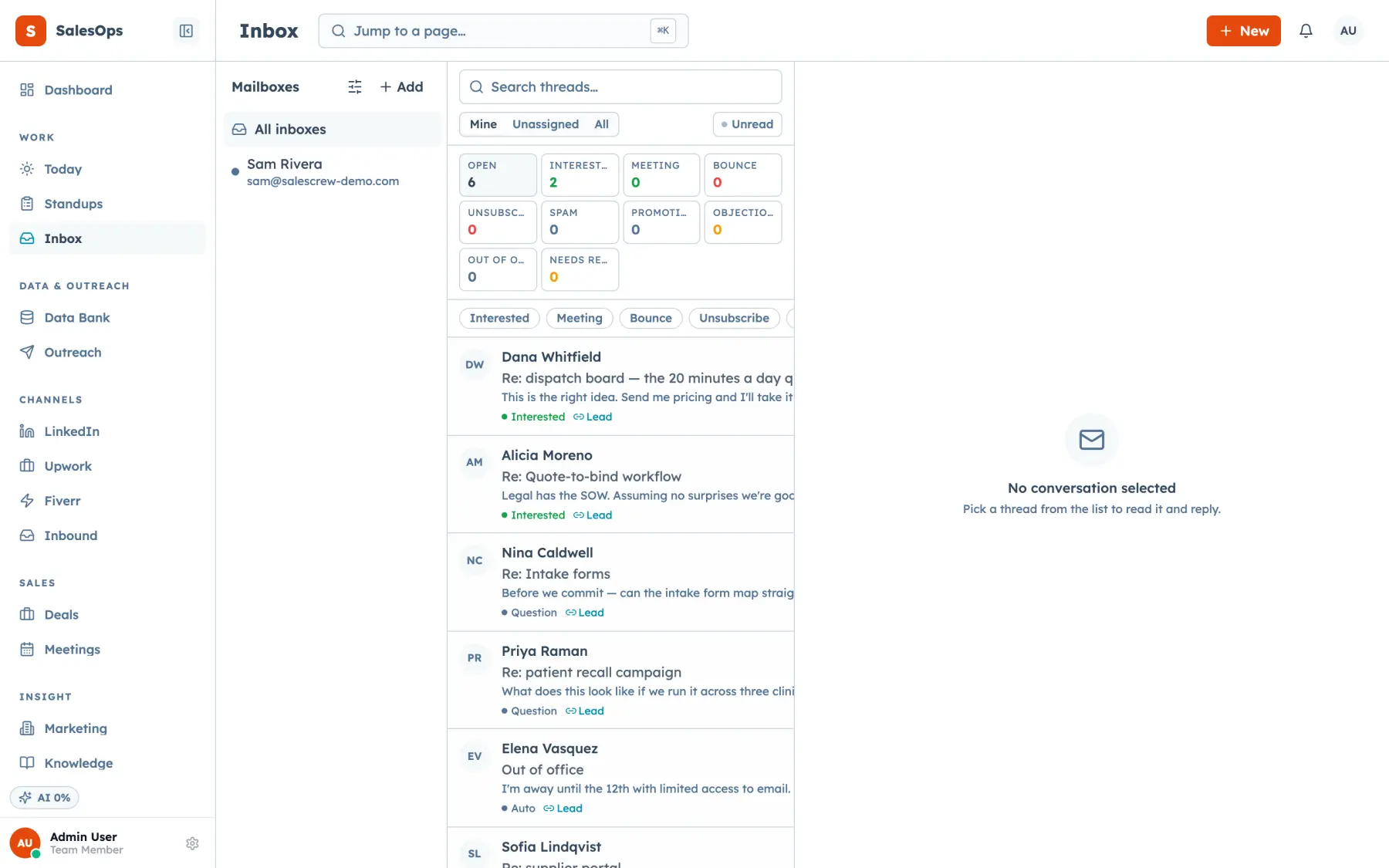
Disclosure: SalesCrew is our product. Segments, suppression enforced at audience freeze, and the ability to build a cadence off a defined segment are live today. That is what makes a segmented reactivation campaign, rather than one blanket send, something the product supports directly.
Never include an opted-out contact in a reactivation send
Questions
- How long dormant should a customer be before targeting them for reactivation?
- It depends on your typical purchase or engagement cycle. A threshold that fits a monthly service is different from one for an annual purchase. Define dormancy relative to your own cadence rather than a fixed universal number.
- Should reactivation messaging be the same as a discount blast?
- Not necessarily. A blanket discount to everyone dormant treats all reasons for going quiet the same way, when price is often not the real reason. Segmenting by likely reason produces more relevant messaging than one generic offer.
- What about customers who unsubscribed or opted out?
- Exclude them from a reactivation campaign entirely, however long ago they opted out. The suppression reflects their stated preference. Overriding it for a win-back attempt undermines that choice.