Dialpad vs a CRM With Calling Built In
Dialpad is a communications platform with AI call features, built to plug into a CRM rather than be one. A CRM with calling built in keeps the call and the deal in one place.
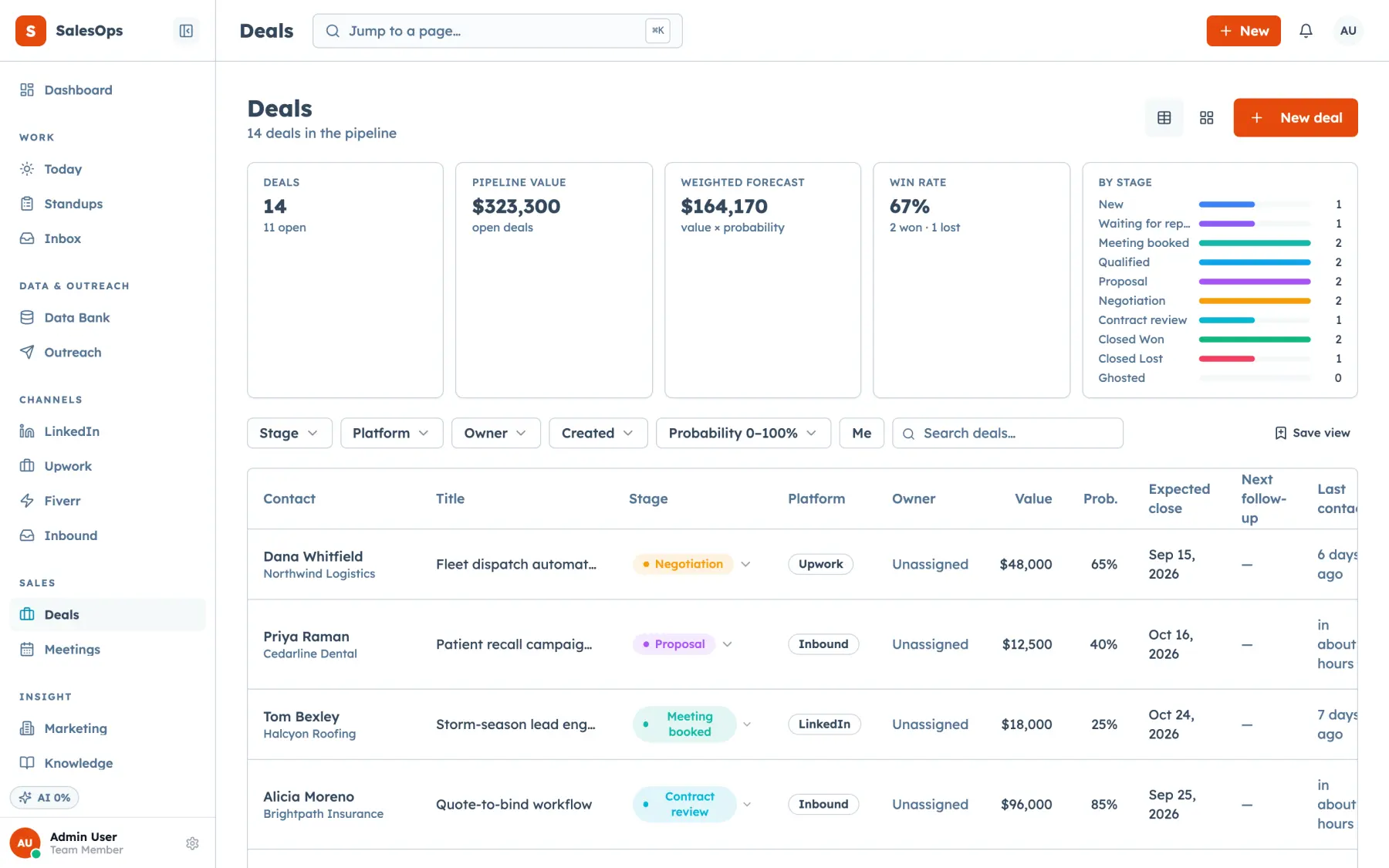
Choose a dedicated platform like Dialpad when a team wants AI-based call features, transcription and conversation intelligence, layered on top of an existing CRM. Choose a CRM with calling built in when the priority is one system, one record, and no separate platform to price out or sync.
The short answer
- Dialpad positions itself as a communications platform, not a CRM, and connects into a CRM's records through its own connector ecosystem rather than storing deals natively.
- A CRM with calling built in logs the call directly against the contact or deal it belongs to, with no separate platform or sync step in between.
- Dialpad's current pricing for its core business phone plans is not published as a flat per-user rate; its newer AI Agent product uses a conversation-based credit model instead.
- The trade-off mirrors other dedicated telephony platforms: Dialpad's AI call features go deeper than most CRM-native calling, at the cost of running a second system priced separately.
Dialpad vs a CRM with calling built in
| Dimension | Dialpad | CRM With Calling Built In |
|---|---|---|
| What it is | Business communications platform built around AI features: phone, meetings, conversation intelligence | A CRM whose calling feature is part of the same record, not a separate platform |
| Where call data lives | In Dialpad, connected to a CRM through its connector ecosystem | In the CRM directly, against the same contact or deal record |
| Pricing model | Business phone plans route to sales; AI Agent product uses conversation-based credits | Varies by CRM; not telephony-specific |
| AI call features | A core part of the product: transcription, conversation intelligence, AI agent credits | Depends entirely on the specific CRM; not universal |
| Setting up two systems | Requires connecting Dialpad to the CRM through its connector ecosystem | None; there's only one system to configure |
| Best for | Teams that want AI-based call intelligence layered onto an existing CRM they intend to keep | Teams that want the call log and deal record to live in the same place without a second platform |
Dialpad's product positioning and pricing structure checked on dialpad.com, September 2026. Per-user pricing for its core business phone plans was not published on the live pricing page at the time of checking; the page directs to a sales conversation. No number is stated here rather than guessed.
Where each holds up, and where it doesn't
Dialpad
- AI-based conversation intelligence and transcription are built into the core product, not an add-on
- Positions itself broadly as a communications platform, covering phone and meetings in one place
- Per-user pricing for its core business phone plans is not published; a team has to talk to sales to get a number
- Still requires a separate CRM and a connector setup to keep call data tied to deal records
CRM With Calling Built In
- One system, one login, one place where the call and the deal record live together
- No connector or integration to configure or maintain between a communications platform and the CRM
- Native calling and AI call features vary a lot by CRM and are often shallower than a dedicated platform's
- Doesn't offer the breadth of Dialpad's meetings and conversation-intelligence features outside of calls
How to choose
If a team wants AI-based call features, automatic transcription, conversation intelligence, agent-assist prompts, layered on top of a CRM it already likes, Dialpad's core strength is in that layer specifically. The trade is that pricing isn't transparent on the public site for the plans most teams would actually run, so getting a real number means a sales conversation before a team can compare cost against alternatives.
If the goal is fewer systems rather than deeper call intelligence, a CRM with calling built in removes the connector step entirely: no separate platform to price, no sync between two records of the same call. The trade there is losing whatever AI-based call features a dedicated platform like Dialpad has built specifically for phone conversations.
A reasonable filter: if a team's main pain point is "we don't know what was said on past calls," Dialpad's conversation-intelligence features address that directly. If the pain point is "we don't know what happened after the call in our pipeline," that's a CRM-record problem a dedicated phone platform doesn't solve on its own.
Pricing changes; verify before you commit
Questions
- Can you use both Dialpad and a CRM with calling built in?
- Dialpad is built to connect into a CRM's records through its ecosystem of connectors rather than replace the CRM itself, so pairing it with a separate CRM is the standard setup. Running Dialpad's calling alongside a CRM's own native calling for the same team doesn't add much; that's a case for picking one system to place the call from.
- How hard is it to move from Dialpad to a CRM's native calling?
- Phone numbers can typically be ported or repointed without major disruption. The heavier lift is transcripts, call recordings, and any AI-generated call summaries Dialpad has produced, since those live inside Dialpad and don't automatically follow the number to a new system. Plan for a short period running both while a team confirms the new calling setup covers what the old one did.
- Does Dialpad replace a CRM?
- No. Dialpad describes itself as a customer communications platform built around AI features, business phone, meetings, and conversation intelligence, built to connect into a CRM through what it calls an ecosystem of connectors rather than store deals or pipeline stages natively. A team using Dialpad for calling still needs a separate CRM behind it.
- What does Dialpad cost?
- As of September 2026, Dialpad's business-phone pricing is not published as a flat per-user rate on its own site; its pricing pages are built around Dialpad's newer AI Agent product, which uses a conversation-based credit model, and the core communications plans route to a sales conversation rather than a listed price. Contact Dialpad directly for current per-user pricing on its business phone plans.