folk vs Pipedrive
A lightweight relationship CRM built for simplicity against a pipeline-first sales CRM built for process. Different tools for different shapes of work, more than direct competitors.
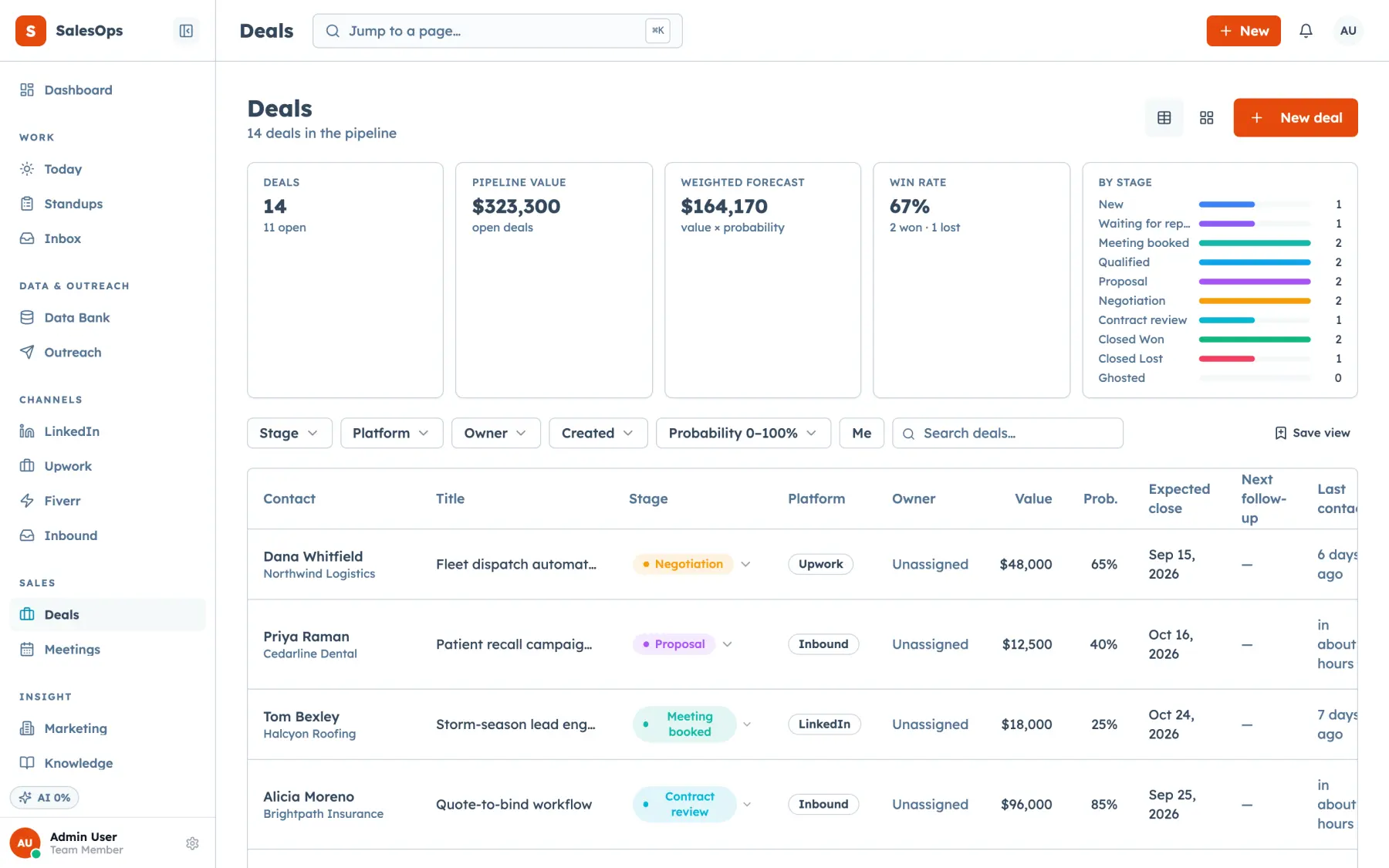
Choose folk when the work is relationship and network tracking, agencies, recruiters, investors, community builders, and a simple, fast interface matters more than a formal sales process. Choose Pipedrive when the team runs a real multi-stage sales pipeline with forecasting and reporting needs that a lightweight CRM will not cover.
The short answer
- folk publishes all three tiers with clear per-seat prices. Standard $24/member/month annually, Premium $48, Enterprise from $80. Each is roughly 20% cheaper billed annually than monthly.
- Pipedrive's pricing page returned a bot-detection block on every direct check for this comparison. Its tier structure (Essential through Enterprise) is publicly known. Current dollar amounts were not independently verified here.
- folk markets itself around simplicity and a Chrome extension for capturing contacts from LinkedIn and other sites. Not around deep sales-process automation.
- Pipedrive markets itself around visual pipeline management as the core product. Deal stages, forecasting, and a large integration marketplace are built around that central pipeline view.
folk vs Pipedrive at a glance
| Dimension | folk | Pipedrive |
|---|---|---|
| Starting price | $24/member/month (Standard, annual) or $30/month (monthly) | Pricing on request; vendor page could not be verified directly as of September 2026 |
| Mid tier | $48/member/month (Premium, annual) or $60/month | Pricing on request |
| Seats model | Per member, per month, annual or monthly billing | Per seat, tiered by feature set (structure publicly known, current prices not verified here) |
| Pipeline / deal management | Basic pipeline included; custom objects and deals added on Premium | Core product strength; the primary interface is the visual pipeline |
| Contact capture | Chrome extension (folkX) for LinkedIn and other sites; built-in enrichment on Standard | Contact and lead capture via forms and integrations, not the product's central feature |
| Automation depth | Email sequences added on Premium; capped usage (2,000 magic-field operations/month on Standard) | Automation is a core feature of the platform, with depth described as scaling by tier |
| Integrations | 5,000+ via Zapier and Make, plus a REST API | One of the larger CRM integration marketplaces in the category |
| Best for | Agencies, recruiters, investors, and community-driven teams tracking relationships more than a formal deal pipeline | Sales teams running a defined multi-stage pipeline with forecasting and reporting needs |
Figures checked on vendor pricing pages, September 2026. folk: folk.app/pricing (direct fetch succeeded). Pipedrive: pipedrive.com/en/pricing returned a bot-detection page on every direct attempt; rows above avoid stating an unverified price rather than estimating one.
Where each platform holds up, and where it doesn't
folk
- Fast to set up and learn; the Chrome extension and contact enrichment work well for capturing relationships as they happen, not after the fact
- 5,000+ integrations via Zapier and Make plus a REST API give it reach well past its own feature set
- The Standard tier caps enrichment at 500 contacts and messages at 2,000 per member monthly, and automation (email sequences) only appears at Premium
- Not built for a complex multi-stage enterprise sales process; a team that needs heavy forecasting and reporting will likely outgrow it
Pipedrive
- The pipeline view is the product's core design, which tends to shorten onboarding for reps who think in stages
- A broader integration marketplace than folk's, useful for teams stitching together calling, marketing, or reporting tools around the CRM
- Current pricing was not verifiable directly from the vendor for this comparison, which is itself a reason to confirm the exact figure before budgeting
- Heavier and more sales-process-oriented than a team doing lightweight relationship tracking, network CRM work, or partnership management actually needs
How to choose
The honest starting question is not which CRM is better. It is whether the work looks like a sales pipeline at all. A recruiter tracking hundreds of loose relationships, an agency managing partner and client contacts, or a fundraising team tracking investor conversations usually does not move records through five formal stages with a close date and a forecast category. That is folk's real use case. It is built to be fast at exactly that, not to compete with Pipedrive on pipeline depth.
A team running an actual sales process, qualify, demo, proposal, close, with a manager who needs forecast numbers by stage, needs Pipedrive's pipeline-first design or something like it. folk's Premium tier adds custom objects and deals. That is an addition to a relationship tool, not a replacement for a pipeline built around the sales process from the ground up.
Price the tier that matches real usage before deciding. folk's Standard tier limits enrichment and messaging volume in ways a growing team will hit within a few months. Confirm Pipedrive's current tier pricing directly with the vendor. It could not be independently verified for this comparison.
Questions
- Can you use both folk and Pipedrive?
- Some teams do, but not for the same records. folk is commonly used for relationship and network tracking: investor lists, partnership contacts, community members. A separate sales pipeline lives in a tool built for it. Running both as the system of record for the same deals would mean maintaining two databases for one process, which defeats the point of either.
- How hard is it to switch from folk to Pipedrive, or the other way?
- The contact and company data moves easily. Both support CSV import and export, and folk's Zapier and API access make scripted migration straightforward. The harder part is that they solve different problems. folk has no real multi-stage sales pipeline to migrate out of. Pipedrive has no relationship-graph or lightweight network view to migrate into. Moving between them usually means re-architecting the workflow, not only moving records.
- Which one is cheaper?
- folk publishes clear tiers. Standard at $24/member/month billed annually ($30 monthly), Premium at $48/member/month annually ($60 monthly), and Enterprise from $80/member/month annually. Pipedrive's own pricing page could not be verified directly for this comparison as of September 2026, due to a bot-detection block on the vendor's site. Its tier names (Essential through Enterprise) are well known. We are not stating unverified dollar figures.
- Does folk have a real sales pipeline like Pipedrive?
- folk has pipeline views and deal stages, and Premium adds custom objects and deals for more structure. It is built as a lightweight layer on top of contact and relationship management. It is not a dedicated sales-process engine with the deal automation, reporting, and forecasting depth Pipedrive is built around. A team running a complex multi-stage enterprise sales process with heavy forecasting will likely find folk thinner than what they need.