Which channel should you use for which lead?
Match the channel to how urgent the lead is and how they arrived. A hot inbound lead gets a call. A cold prospect gets email first. A reply gets answered on the channel they used.
The short answer
- Urgency and origin, more than any fixed rule, should decide the channel. A lead who just filled out a form asking for a quote is signaling readiness. A phone call matches that better than a queued email.
- Cold outreach to someone with no prior relationship to the business is usually better started on a lower-friction channel like email. A multi-step cadence can run there without demanding the prospect's immediate attention.
- A lead who replies on a specific channel should generally be answered on that same channel. Switching channels on them adds friction they did not ask for, and can read as ignoring how they chose to engage.
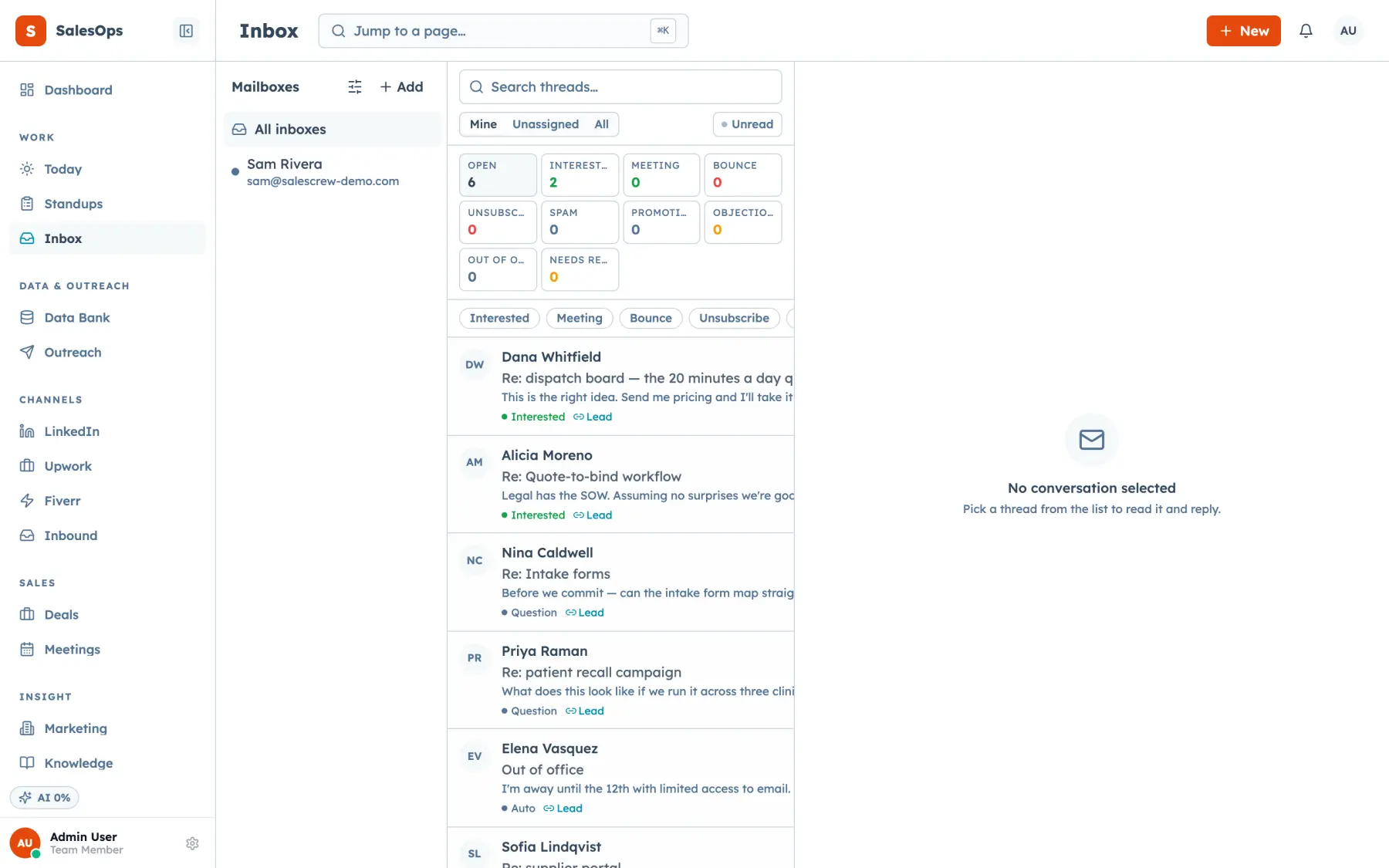
- When more than one channel is in play for the same lead, sequence them. Stop the whole sequence the moment any one channel gets a response. That prevents the common failure of messaging someone who already replied.
Why a single rule for every lead does not work
It is tempting to want one rule. Always call first, or always start with email. Leads differ enough in urgency and origin that a single rule serves some of them badly. A person who just submitted a form describing an urgent need is telling you, through their own behavior, that they want a fast response. A call reaches them faster than an email they might not open for hours. A cold prospect with no prior relationship has given no such signal. A phone call to someone who has never heard of you makes a different, often worse, first impression than an email they can read on their own time.
The more useful framework sorts leads by two variables. How urgent is the signal? How much of a relationship already exists? Hot, high-relationship leads (an existing customer asking about a new service) tolerate and often prefer a direct call. Cold, no-relationship leads (a name sourced for outbound prospecting) are usually better served starting on a lower-friction channel that does not demand immediate attention.
A simple channel-matching framework
| Lead type | Signal | Suggested first channel |
|---|---|---|
| Hot inbound (form fill, demo request) | High urgency, some existing intent | Call or fast email/text acknowledgment |
| Warm (referral, past customer) | Some relationship already exists | Whichever channel the relationship already uses |
| Cold outbound prospect | No prior relationship, no urgency signal | Email, often the first step of a multi-step cadence |
| A lead who just replied | Active engagement, on a specific channel | Reply on the same channel they used |
What to check in your own process
Look at how your team decides which channel to use for a new lead today. Is it an explicit rule or just habit? Check it against the urgency and relationship framework above. Pay particular attention to whether a reply on one channel is stopping activity on the others. That gap is the most common and most damaging failure in multi-channel outreach.
Disclosure: SalesCrew is our product. Email, LinkedIn, and calls already share one contact record today. SMS as a further channel option in the same sequencing logic is on our roadmap and not shipped yet. The framework described here applies whichever channels are available to you today.
A reply on one channel has to stop the others
Questions
- Should you always match the channel a lead used to contact you?
- It is a reasonable default. Replying on the same channel a lead used respects how they chose to engage. Urgency can override it. A form fill with a phone number attached might still warrant a call if the inquiry sounds time-sensitive.
- Is cold calling ever better than cold email as a first touch?
- It depends on the audience and the offer. Some segments respond better to a call as the opening move. For most cold outbound at any real volume, email, or a multi-step cadence starting with email, is the more common and more scalable first touch.
- How do you avoid overwhelming a lead with too many channels at once?
- Sequence the channels rather than firing all of them at once. Stop the sequence the moment the lead responds on any channel, so a reply on one does not get followed by more messages on the others.