How to handle out-of-office replies
An out-of-office message is not a real response. The right move is usually to pause the cadence until the stated return date, then resume. Do not treat it as either engagement or a decline.
The short answer
- An out-of-office auto-reply signals the contact was unreachable, not that they engaged or declined. Treating it the same as a genuine reply misreads the signal entirely.
- The common handling is to pause the cadence, extract a return date if the message includes one, and resume sending automatically after that date. Not to stop outreach altogether.
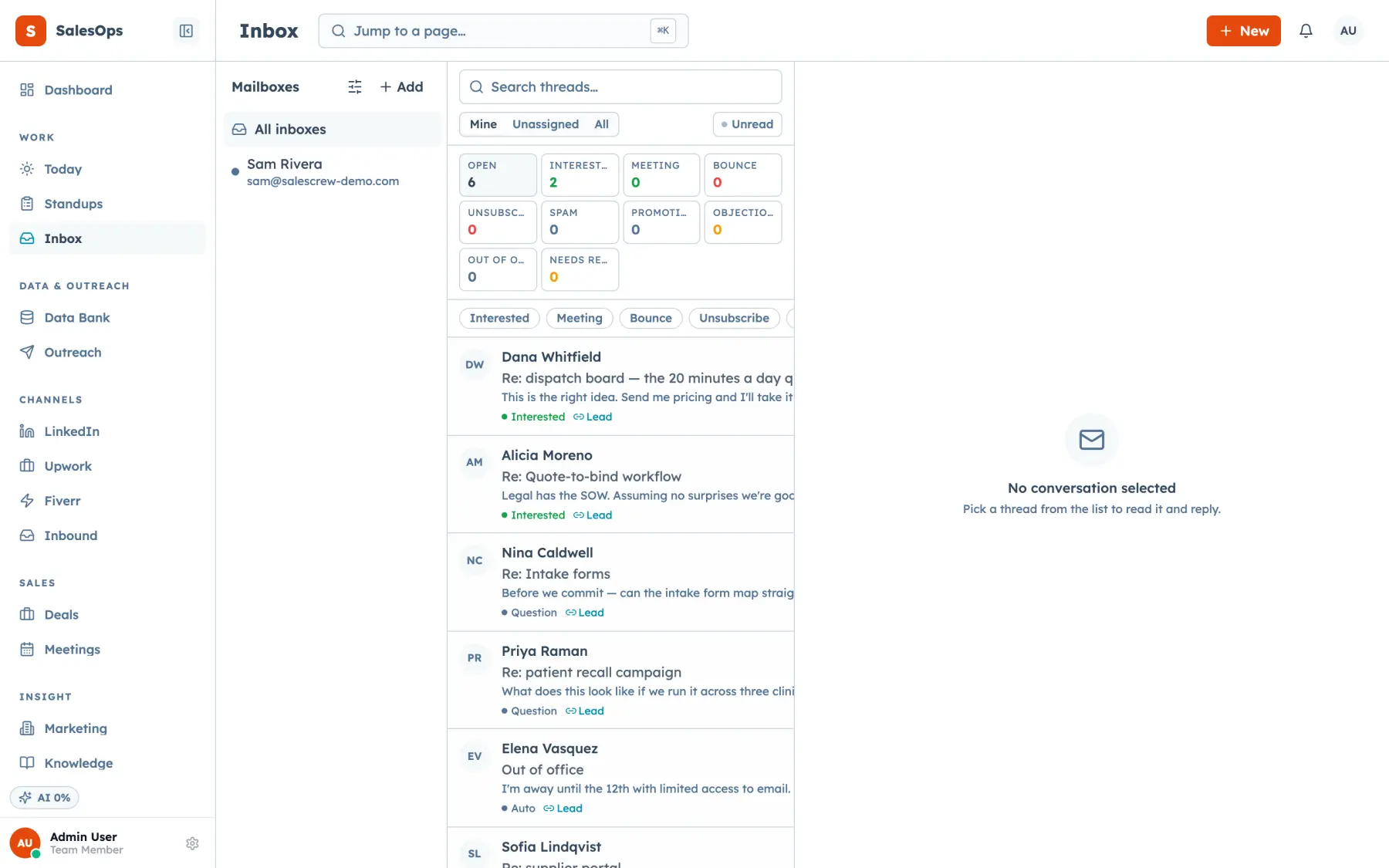
- A cadence tool that cannot tell an out-of-office auto-reply from a genuine human response will stop the sequence by mistake. The contact never receives the remaining scheduled touches.
- An out-of-office that names a colleague to contact in the interim is worth logging as a lead on a second point of contact, separate from resuming the original cadence.
Why treating an auto-reply as a real reply breaks a cadence
Most cadence tools stop or pause a sequence the moment a reply is detected. The reasoning is sound: a reply means the contact is now in a conversation and should not keep receiving scheduled touches. An out-of-office auto-reply looks like a reply to a system that is not checking its content. It lands in the same thread, from the same address, with text in the body. If the system stops the cadence on that basis, the contact never receives the remaining messages. They never saw any of it either, because they were away.
Telling an out-of-office from a real reply usually comes down to recognizable patterns. Automated subject line conventions. Phrases like "I am currently out of the office" or "I will be unavailable until". Often, no personalized content responding to the specific message sent. A system that checks for these patterns before treating something as a genuine reply avoids the false stop.
How to treat different reply types
| Reply type | Should the cadence stop? |
|---|---|
| Genuine reply (interested, declining, or asking a question) | Yes, stop and hand to a human |
| Out-of-office with a return date | Pause, resume automatically after the return date |
| Out-of-office with no return date | Pause, resume after a reasonable default (commonly 1-2 weeks) |
| Out-of-office naming a colleague to contact instead | Pause the original cadence; log the named colleague as a new lead |
What to actually check in your own setup
If a cadence tool does not tell out-of-office replies from genuine ones, the practical workaround is a human spot-check on stopped cadences, especially for high-value target lists. That catches false stops before too much time passes. For tools that do detect out-of-office messages, confirm the default resume behaviour when no return date is given. An indefinite pause with no resume condition can quietly remove a contact from the pipeline.
It is worth reviewing a sample of auto-detected out-of-office replies periodically, even with a tool that claims to handle them automatically. Detection rules built around common phrases can miss less standard formats: a short "away until further notice" note, or a language other than the one detection was tuned for. A quick manual spot-check catches these edge cases before an interested contact ends up permanently paused with no one aware.
Disclosure: SalesCrew is our product. Its inbox classification tells an out-of-office auto-reply from a genuine response and pauses the relevant cadence rather than stopping it outright. It resumes automatically once the pause window passes. It does not always extract a stated return date correctly from every message format. A person reviewing paused cadences periodically is still a reasonable check.
A silently stopped cadence looks identical to a successful one
Questions
- Should a cadence stop completely on an out-of-office reply?
- Not necessarily. An out-of-office is not the contact declining or engaging. It is a signal they were unreachable. Pausing the cadence and resuming after the stated return date, if one is given, is more common than stopping outreach entirely.
- What happens if an out-of-office reply is mistaken for a real response?
- The cadence typically stops as if the contact replied. No further scheduled touches go out, and the person never sees the rest of the sequence. This is a common, easy-to-miss failure in tools that treat any reply as a stop signal without checking what kind of reply it was.
- Can an out-of-office message reveal useful information beyond the return date?
- Sometimes. An out-of-office that names a colleague to contact in the meantime is a legitimate lead on a second contact at the same company. Log it, even though the original cadence is paused.