How many steps should a cadence have?
Most working B2B cadences run 6 to 10 touches over 2 to 4 weeks and mix in at least one non-email channel. Extending well past that adds volume more than it adds replies.
The short answer
- 6 to 10 touches spread across 2 to 4 weeks is the range most B2B cadence playbooks converge on. It combines several emails with at least one other channel, such as a LinkedIn touch or a call attempt.
- Reply rates concentrate in the early-to-middle touches of a cadence. Beyond roughly 10 to 12 steps, unsubscribes and spam complaints grow faster than new replies, based on commonly cited outbound benchmarks.
- A cadence should stop automatically on a genuine reply. Continuing to send scheduled steps after a contact has replied, including mistaking an out-of-office auto-reply for engagement, is one of the most common outbound failures.
- Spacing matters as much as count. Touches packed too close together read as aggressive. Gaps longer than about a week let the contact forget the previous message entirely.
Why the step count is not really the design decision
Cadence design is often framed as picking a number of steps. The number is really a result of two other decisions: how many channels you are using, and how long you are willing to keep trying before moving on. A 6-step, email-only cadence and a 6-step cadence that mixes two emails, a LinkedIn connection request, a call attempt, and two more emails cover very different ground, even though the step count is identical.
Multi-channel cadences tend to outperform single-channel ones at the same step count for a simple reason. Some contacts do not check the inbox a cold email lands in as often as they check LinkedIn. Others screen calls but read messages. Spreading the same number of touches across channels raises the odds that at least one lands somewhere the contact is paying attention, rather than sending the same person six emails they may never open.
Past roughly 10 to 12 touches, most cadences stop earning their keep. By then the contacts who were going to reply mostly have. Extra touches to the rest skew toward annoyance rather than persuasion. That shows up as rising unsubscribe and complaint rates rather than a matching lift in replies.
A common cadence shape
| Step | Day | Channel |
|---|---|---|
| 1 | Day 1 | |
| 2 | Day 3 | LinkedIn connection request |
| 3 | Day 5 | Email (different angle) |
| 4 | Day 8 | Call attempt |
| 5 | Day 11 | |
| 6 | Day 15 | LinkedIn message (if connected) |
| 7 | Day 19 | Email (breakup / final touch) |
A commonly used shape, not a fixed rule; spacing and channel mix should reflect how the specific audience is reachable.
What to actually check before adding more steps
Before extending a cadence, look at where replies are landing in the existing one. If most replies come in steps 1 through 4 and steps 5 through 7 rarely get a response, the fix is usually to sharpen the early messaging, not to add step 8. If unsubscribe or bounce rates climb in the later steps, the cadence has outstayed its welcome for that segment. A shorter cadence with a cleaner exit point will likely perform better than a longer one.
It also helps to review cadence length by segment rather than applying one fixed number to every audience. A segment that already knows the sender, a warm referral or a past customer contacted about a new offer, often needs fewer touches than a genuinely cold list reached for the first time. Treating every segment with the same step count tends to under-reach a cold audience or over-touch a warm one. Both show up in the reply and unsubscribe data if tracked by segment.
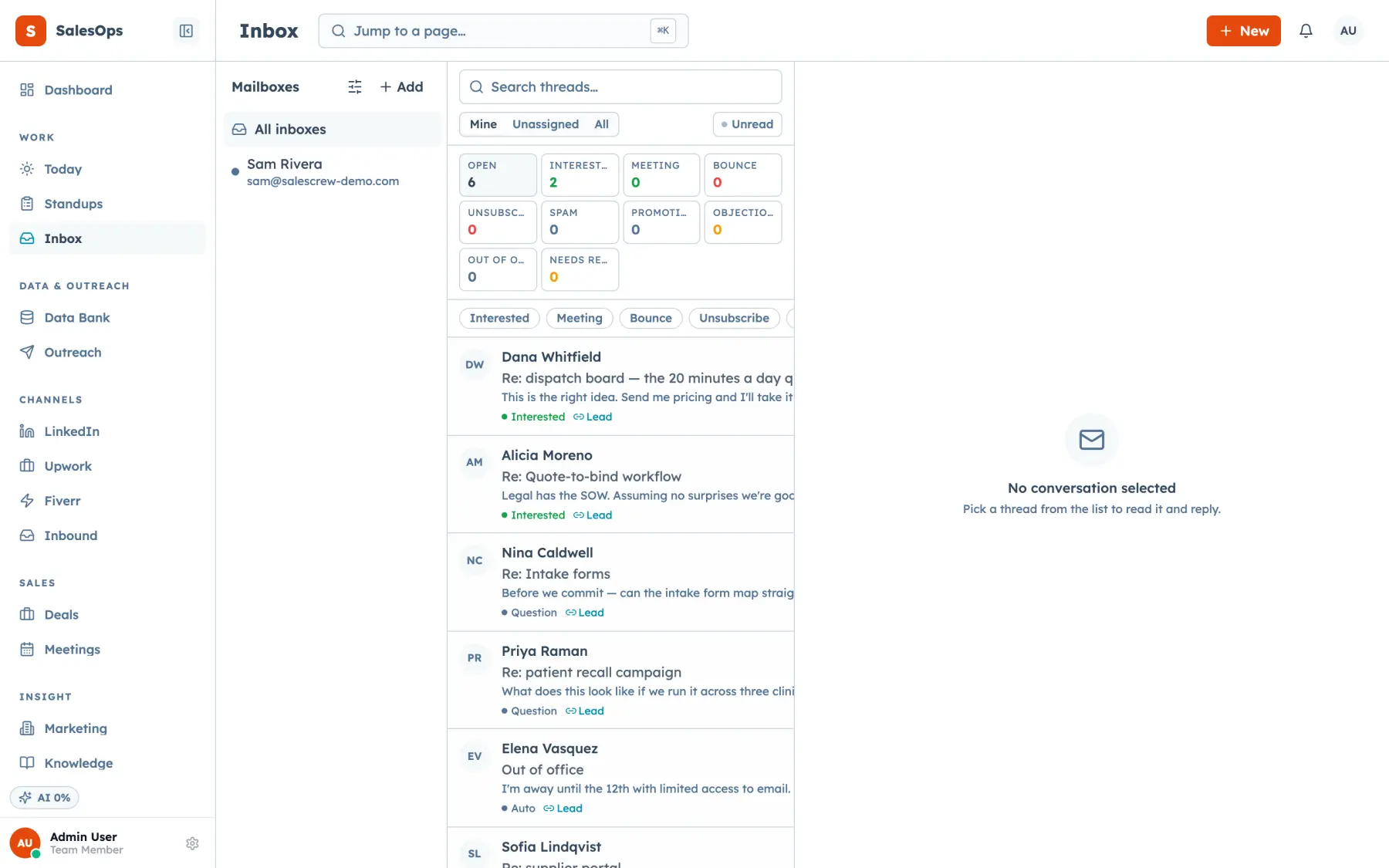
Disclosure: SalesCrew is our product. Cadences are configurable with per-step timing and channel. A reply pauses or stops the cadence automatically, depending on the policy set, and suppression is checked again at send time. It does not tell you the ideal step count for your audience. That comes from watching where your own replies land.
A stopped cadence should actually stop
Questions
- Is a longer cadence always better?
- No. Reply rates in most published benchmarks concentrate in the first several touches. A cadence that keeps extending mainly adds unsubscribes and spam complaints rather than new replies. There is a point of diminishing return, and it comes sooner than most people assume.
- Should every step be an email?
- Email-only cadences are common but not the strongest pattern. Mixing in a LinkedIn touch or a call attempt beside email steps is a widely recommended way to reach people who do not respond to email, without adding more emails to the same inbox.
- What should happen if the contact replies mid-cadence?
- The cadence should stop or pause automatically. Continuing to send scheduled touches after a reply is a common source of embarrassing sends. So is mistaking an out-of-office auto-reply for a real response.