Building a CRM a sales team will actually use
Adoption does not fail because reps are lazy. It fails when the CRM is a chore layered on top of how they already work, instead of built into it.
The short answer
- CRM adoption usually fails at data entry. A rep has to stop, switch to a separate tool, and record something the CRM needed but the rep got no immediate benefit from recording.
- Removing that friction matters more than adding features. A feature nobody logs in to use has no effect on the pipeline it was meant to improve.
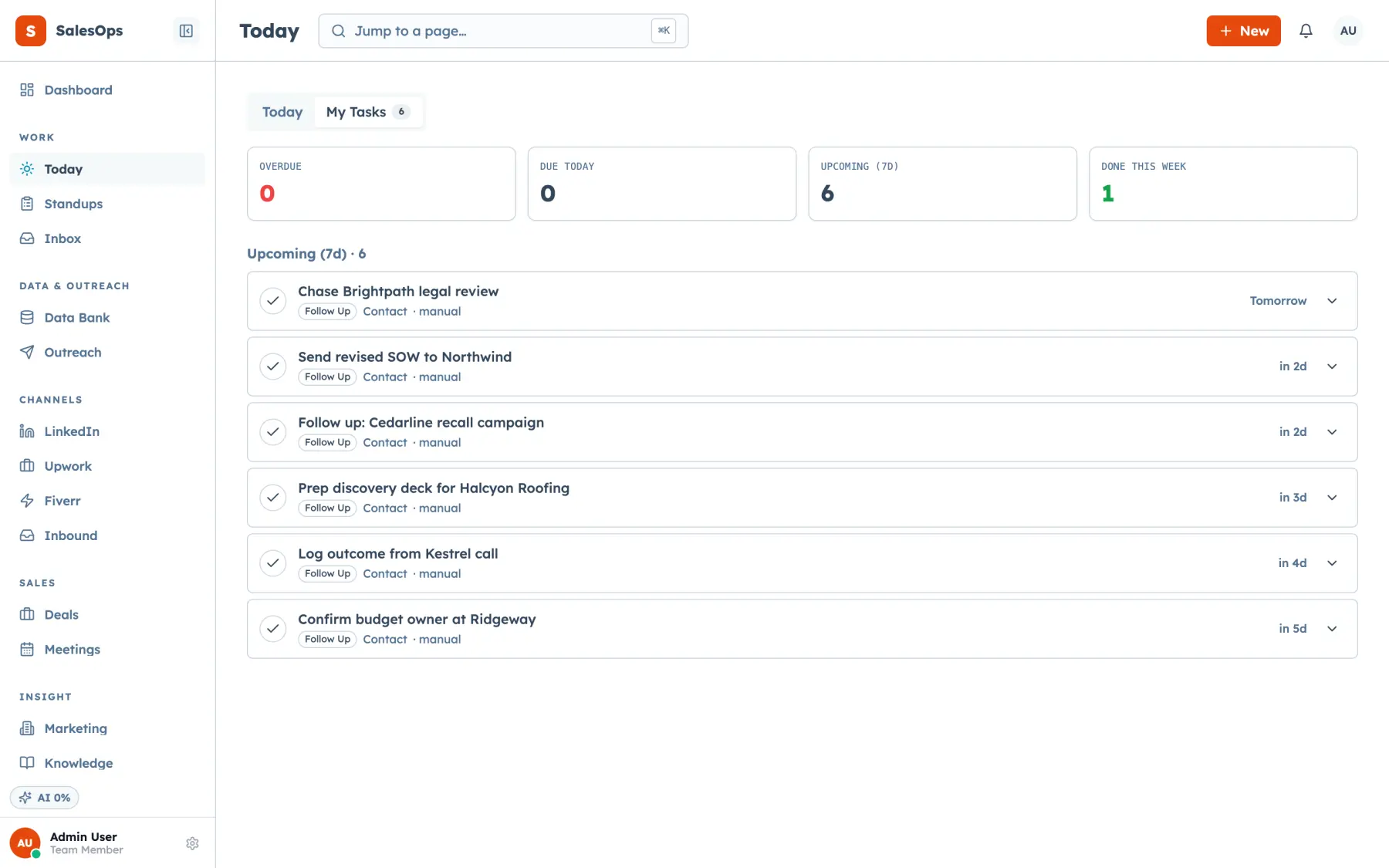
- SalesCrew's MCP tools let a CRM update, such as logging a note, moving a stage or checking a contact, happen from the AI client a rep already has open, not only a separate web form.
- Unlimited seats on every SalesCrew tier removes the rationing a per-seat price forces. A manager never has to decide who gets left out of the system of record because a license was too expensive.
Where adoption actually breaks
A new CRM rarely fails because the pipeline view is ugly or the reporting is thin. It fails at data entry. A rep finishes a call, and the CRM asks them to switch tools, find the right record, and type in what just happened. The rep gets nothing back for doing it. The value shows up later, to a manager building a forecast, not to the person who typed it in. That asymmetry, effort now and payoff later to someone else, is the mechanism behind a familiar pattern: a CRM used enthusiastically in week one and abandoned by week three.
Adding features on top of that broken loop does not fix it. It usually makes the loop longer, because now there are more fields to fill in before the rep can get back to selling. The fix has to attack the friction at the point of entry, not add capability somewhere else in the product.
What changes when the CRM meets a rep where they already are
One source of friction is the tool switch itself. A rep working inside email, a calling tool, or increasingly an AI assistant like Claude or Cursor has to stop, open a separate CRM tab, and re-enter what just happened. SalesCrew exposes every CRM action as an MCP tool: updating a contact, moving a deal stage, logging a note, checking what is due today. A rep who already works inside an AI client makes the update from there, as an instruction, with no switch to another application. The web UI is not replaced. The tools have the same effect as the matching UI action, so a rep who prefers the form still has it.
A second source of friction is the drafting. Writing a call summary or a follow-up email from scratch, every time, is real work on top of the call itself. SalesCrew's Inbox agent drafts a reply and queues it for a person to approve or edit. The rep's job shifts from writing on a blank page to reviewing something already drafted. That is a smaller ask each time. The rep, not the agent, still sends it.
The part that is a pricing decision, not a product one
A less obvious cause of poor adoption is who gets access at all. Per-seat pricing pushes a manager to ration licenses to whoever seems to need the CRM most, usually closers. That quietly excludes the rest of the team from the system of record: support, junior reps, part-time staff. Those people still touch customers. Their interactions are logged nowhere the rest of the team can see. So the CRM's picture of a customer is missing exactly the interactions the excluded staff had.
SalesCrew prices with unlimited seats on every tier, to remove that rationing decision. It does not make everyone use the CRM well on its own. That still depends on solving the entry-friction problem. But it removes a structural reason a manager would keep part of the team out of the system. Adoption is not one fix. It is friction at entry, addressed by meeting reps where they work, plus access that is not rationed by price. Both aim at the same outcome: a CRM that reflects what the team did, because recording it cost the rep as little as possible.
Questions
- Is the fix for CRM adoption always more automation?
- Not automation for its own sake. The fix is removing friction between what a rep is already doing and what the CRM needs recorded. That friction can be removed by automation, by a simpler form, or by letting the update happen from a tool the rep already has open.
- Does unlimited seats really change adoption, or is that just a pricing detail?
- It changes who gets access in practice. A per-seat price makes a manager ration logins to the people judged to need the CRM most. That quietly excludes everyone else from the system of record. Unlimited seats removes that rationing decision, so the whole team is in one system from day one.
- Can an MCP tool really replace filling out a CRM form?
- For a rep who already works inside an AI client like Claude or Cursor, yes. Updating a deal or logging a note becomes an instruction in that same tool instead of a switch to a separate web app. For a rep who does not use those tools, the web form is still there. The MCP tools and the UI have identical effect.