How to measure lead response time
Stamp the moment a lead arrives and the first human reply, then report the median and the share answered inside 5 minutes.
The short answer
- Lead response time is the gap between two timestamps: when the lead arrived and when a person first replied, called or emailed them.
- Report lead response time as a median plus the share of leads answered inside 5 minutes. An average hides the leads nobody touched for two days.
- Leads that never got a reply belong in the report as their own bucket. Dropping them makes a slow team look fast.
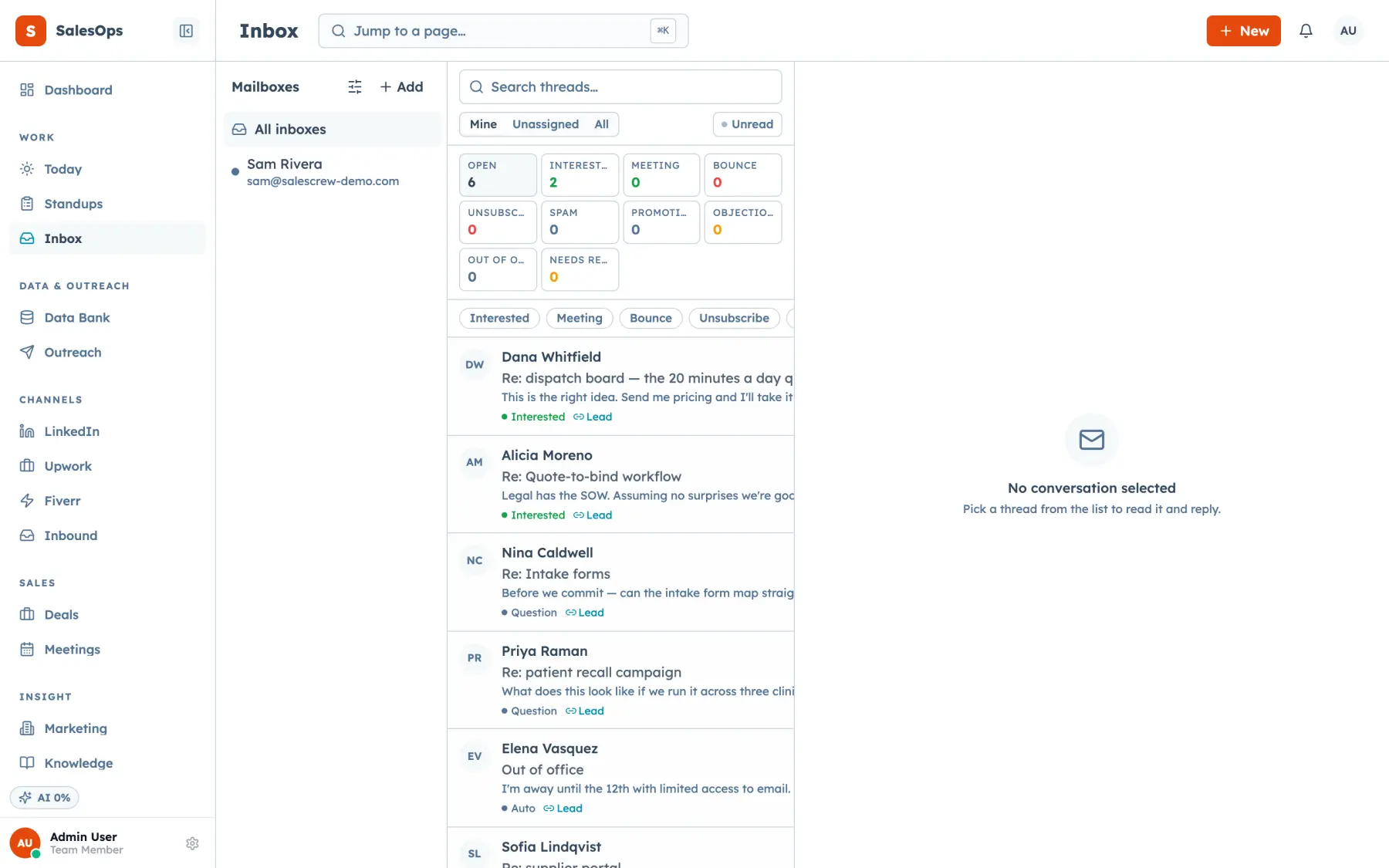
- SalesCrew measures response time in the inbox with an SLA timer per category, and an untouched-inbound timer flags any new lead nobody has worked yet.
Capture two timestamps, and only two
You need a start and a stop. The start is the moment the lead exists: the form submit, the booking, or the email landing in your inbox. The stop is the first human touch the buyer can see. Anything else, like the rep opening the record, is activity, not a response.
Most CRMs already hold the start time. The stop time is where reports go wrong, because a call made from a personal phone never reaches the record. Log every channel into the same record, or your numbers will show a response time that's longer than the truth.
Report the median and the 5-minute share, not the average
Averages lie about response time. Ten leads answered in two minutes and one left for three days give you an average of nearly seven hours. Neither number describes what happened. The median tells you what a typical lead gets. The 5-minute share tells you how often you hit the target.
Why 5 minutes? The Lead Response Management study found the odds of qualifying a prospect fell 21-fold when the response stretched from 5 to 30 minutes. The same study found those odds dropped fourfold between 5 and 10 minutes. That's why the first bucket matters most.
Response-time buckets to report each week
Count leads per bucket; the share in the first bucket is your headline number.
| Bucket | What it tells you | What to do about it |
|---|---|---|
| Under 5 minutes | Leads you reached while they were still on your site | Protect it: this is your target share |
| 5 to 30 minutes | Leads answered in the same sitting, but late | Check who was on shift and where the alert went |
| 30 minutes to 24 hours | Leads handled as a task, not a moment | Route new leads to a named owner |
| Over 24 hours | Leads that sat in a queue overnight | Add an after-hours rule or a backup owner |
| Never answered | Leads lost to the process | Report the count every week, by source |
Benchmark from the Lead Response Management study, leadresponsemanagement.org/lrm_study, checked September 2026.
How SalesCrew measures it for you
SalesCrew stamps every inbound form and Calendly booking when it arrives in the inbound channel. In the inbox, each category carries its own SLA timer, so a sales enquiry can run on a tighter clock than a support question. The first reply from any connected mailbox stops the timer.
The untouched-inbound timer watches new leads that nobody has worked. When a lead crosses your limit, it's flagged for the team, so it shows up in the report as late, not missing. You can read the same numbers over MCP from Claude, ChatGPT or Cursor.
Auto-replies make every team look fast
Questions
- What counts as the first response to a lead?
- Count the first human touch the lead can see: a reply, a call attempt or a personal email. An auto-responder doesn't count, because it proves only that your form works. Decide this once and write it down, so every report uses the same rule.
- Should lead response time use business hours or clock hours?
- Report both, and lead with clock hours. The buyer who fills in your form at 9pm is waiting in clock hours. Business-hours numbers are fair for judging a rep, but clock hours show what the buyer lives through.
- What is a good lead response time?
- Under 5 minutes is the target most teams use. The Lead Response Management study found the odds of qualifying a lead dropped 21-fold when the response stretched from 5 to 30 minutes. Track the share of leads you reach inside 5 minutes and push it up each month.
- How do I measure response time for leads that come in by email?
- Start the clock when the message lands in the inbox, not when someone opens it. SalesCrew stamps every thread when it arrives, and the SLA timer runs from there. The first reply sent from any connected mailbox stops it.