See the pages a lead read before reaching out
SalesCrew's PostHog collector pulls sessions hourly, so every lead record can show the visit path that brought them in.
- Read-only collector
- Hourly session pulls
- Visit path on the lead
The short answer
- SalesCrew connects to PostHog with a read-only collector into the marketing module. It pulls sessions every hour into your own database and leaves your PostHog project untouched.
- Sessions next to leads answer a question forms can't: which pages a buyer read before they asked for a quote. SalesCrew traces a lead back to the pages they visited.
- Setup needs a personal API key with Read scope and the project id. The key goes into Supabase Vault and isn't displayed again.
Mechanism
Hourly sessions in, and the joins that make them worth having.
| What | Mechanism | Direction | Objects | Status |
|---|---|---|---|---|
| Sessions | Read-only collector against the PostHog API, every hour | Inbound | Marketing session tables | Available |
| Lead trace | A lead linked back to the pages its visitor saw | Internal | Leads, sessions | Available |
| Session list | Marketing → Sessions in the app | Internal | Marketing tables | Available |
| Tag audit (optional) | Google Tag Manager container versions, read-only | Inbound | Container versions | Available |
| Credential | Personal API key and project id in Supabase Vault | None | Integration keys | Available |
| Agent access | marketing_pages and marketing_timeseries over MCP | Outbound | Marketing tables | Available |
Mechanisms read from the SalesCrew integration table and the PostHog setup doc, September 2026. PostHog's own documentation is the authority on API keys and scopes.
Setup
Five minutes, if the PostHog snippet is already on your site.
- 1
Create a personal API key
In PostHog, open Settings → Personal API keys → Create, give it Read scope on the project, and copy it.
- 2
Note the project id
It's the number in the address bar, in the part that reads /project/ followed by digits.
- 3
Save both in SalesCrew
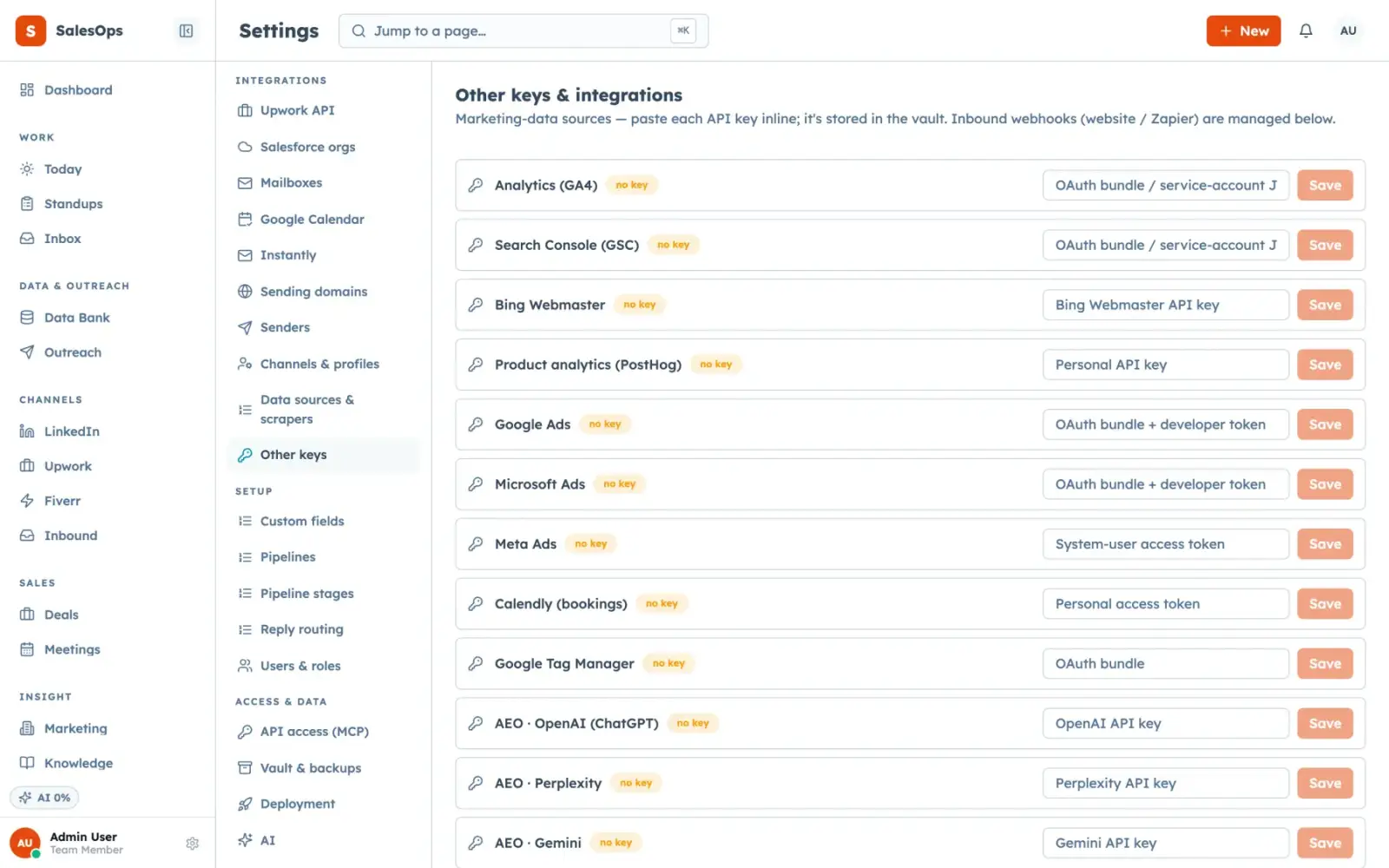
Settings → Other keys → Product analytics (PostHog) → Set key. Paste the api_key and project_id as JSON, save, and run Test. It returns today's visitor count.
- 4
Add GTM if you want the tag history
Settings → Other keys → Google Tag Manager, with your GA4 bundle plus the container id.
No sessions usually means no snippet
Questions
- What does the PostHog collector bring into SalesCrew?
- Sessions, pulled every hour. They land in Marketing → Sessions, and SalesCrew can trace a lead back to the pages that visitor saw before the form or the booking.
- Which PostHog key do I use?
- A personal API key with Read scope on the project, plus the project id from the address bar. A project key that starts with phc_ is the public one your site uses, and it returns a 401 here.
- Where does Google Tag Manager come in?
- GTM is an optional second collector. It uses the same OAuth bundle as the GA4 collector, with the tagmanager.readonly scope, and reads container versions so you have an audit trail of tag changes.
- Which plan includes it?
- Agency, at $1,200 a month, includes the marketing module and every collector, along with marketplaces, data sources and every agent. Seats are unlimited on every tier.
Put the visit path on every lead
Hourly PostHog sessions in your own database, joined to the leads they became.