What is bounce rate?
The share of a send that never reached a real inbox, and the line where it starts hurting the rest.
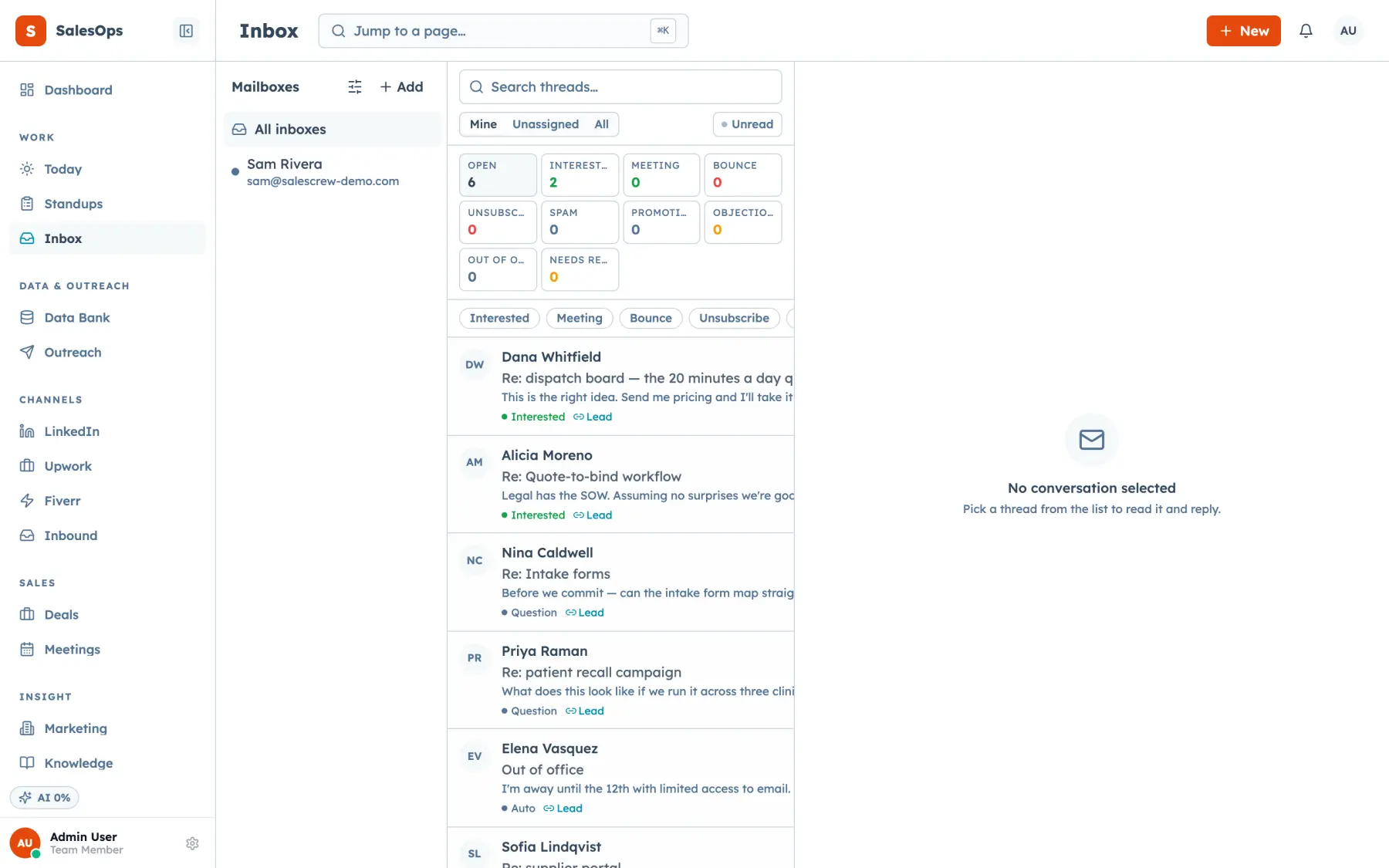
Bounce rate — Bounce rate is the share of sent emails rejected by the receiving server — hard bounces for invalid addresses, soft bounces for temporary problems. Providers treat a rate above roughly 2–3% as a signal of a bad list.
Why it matters
A bounce is a message the receiving server rejected outright. A hard bounce means the address does not exist, invalid or mistyped, and will never accept mail. A soft bounce means a temporary problem, a full inbox or a server briefly down, that might resolve on its own. Bounce rate tracks both together as a share of everything sent, and it is one of the clearest signals providers use to judge whether a list is well maintained.
A high bounce rate does not only fail to reach those specific recipients; it damages the sender's reputation with the mailbox providers watching, which lowers deliverability for everyone else on the same send. A rate above roughly two to three percent starts reading as carelessness rather than bad luck. The fix for hard bounces is straightforward, remove the address and never send to it again, but soft bounces are often mishandled: a soft bounce that repeats across two or three consecutive sends is not really temporary anymore and should be treated as a hard one and dropped from the list.
How bounce rate is managed
- 1
A message is sent
As part of a campaign or cadence step.
- 2
The receiving server responds
Accepting the message, or rejecting it as a hard or soft bounce.
- 3
Hard bounces are removed immediately
Added to the suppression list so they are never sent to again.
- 4
Soft bounces are tracked across sends
A repeated soft bounce is escalated to a hard one.
- 5
The overall rate is monitored per send
A rate creeping above the safe range signals a list problem to fix before the next send.
The mistake to watch for
Questions
- How is bounce rate different from spam complaint rate?
- Bounce rate measures messages the receiving server rejected outright. Spam complaint rate measures messages that were delivered but the recipient marked as spam, a different and generally more damaging signal.
- What bounce rate is considered safe?
- Roughly under two to three percent. Above that range, mailbox providers start treating it as evidence of a poorly maintained list, which can affect deliverability for future sends.
- Should a hard-bounced address ever be retried?
- No. A hard bounce means the address does not exist, and it should go straight to the suppression list rather than being retried.