Should your agency build its own software?
Almost never as a first move. Building software to sell or give to clients is a different business with different economics than running a service agency. The ongoing maintenance cost is easy to underestimate.
The short answer
- Building software an agency sells or provides to clients is a fundamentally different business from running a service agency. It carries its own engineering, support and maintenance costs that continue whether or not new client revenue arrives.
- An internal tool built only for the agency's own team is a much smaller commitment than client-facing software. It can tolerate rough edges and does not need documentation, security review, or external support.
- White-labeling an existing tool is a common middle ground. It gives an agency its own branding and a client-facing product feel without the engineering investment or maintenance burden of building from scratch.
- Building makes sense only once a very specific, repeated need has been proven across many clients over a long period, and existing tools have been confirmed unable to serve it. Not as an early differentiation strategy.
Why building software is a different business, not a bigger service
Agencies sometimes consider building proprietary software to differentiate from competitors or capture more value than a service model alone provides. This underestimates how different software is as a business. A service agency's costs scale roughly with the people delivering the service. Software's costs include ongoing engineering, security patches, infrastructure and support. All of them continue whether or not new revenue is coming in. All of them need skills a service-focused team may not have in-house.
The distinction between an internal tool and client-facing software matters here. A small script or dashboard purely for the agency's own team is a modest, contained investment. It only has to work well enough for people who already understand its quirks. Something clients will use directly is a different commitment entirely. Documentation, support when something breaks, security, and ongoing maintenance become real obligations the moment a client depends on it. They are not optional polish.
Build versus resell versus white-label
| Approach | Upfront cost | Ongoing cost | Speed to offer clients |
|---|---|---|---|
| Build proprietary software | Very high | High, ongoing engineering and support | Slow, months to years |
| White-label existing software | Low to moderate | Low, mostly support you provide | Fast, days to weeks |
| Resell as-is (no white-label) | Very low | Low | Fastest |
What to actually consider before building anything
Start by asking whether the need is genuinely unmet by anything on the market, or whether it just has not been the easiest or cheapest option to configure yet. A repeated pattern of client requests that no existing tool addresses, confirmed after trying several options, is a stronger signal than a general sense that "we could build something better". Exhaust white-labeling an existing tool before committing to building from scratch. It captures much of the branding and relationship benefit without the engineering investment.
If the need persists after exhausting existing tools and white-label options, start with the smallest possible internal version rather than a full client-facing product from day one. A narrow internal tool, tested on the agency's own work before any client sees it, shows whether the idea holds up in practice. It costs a fraction of a full client-facing build.
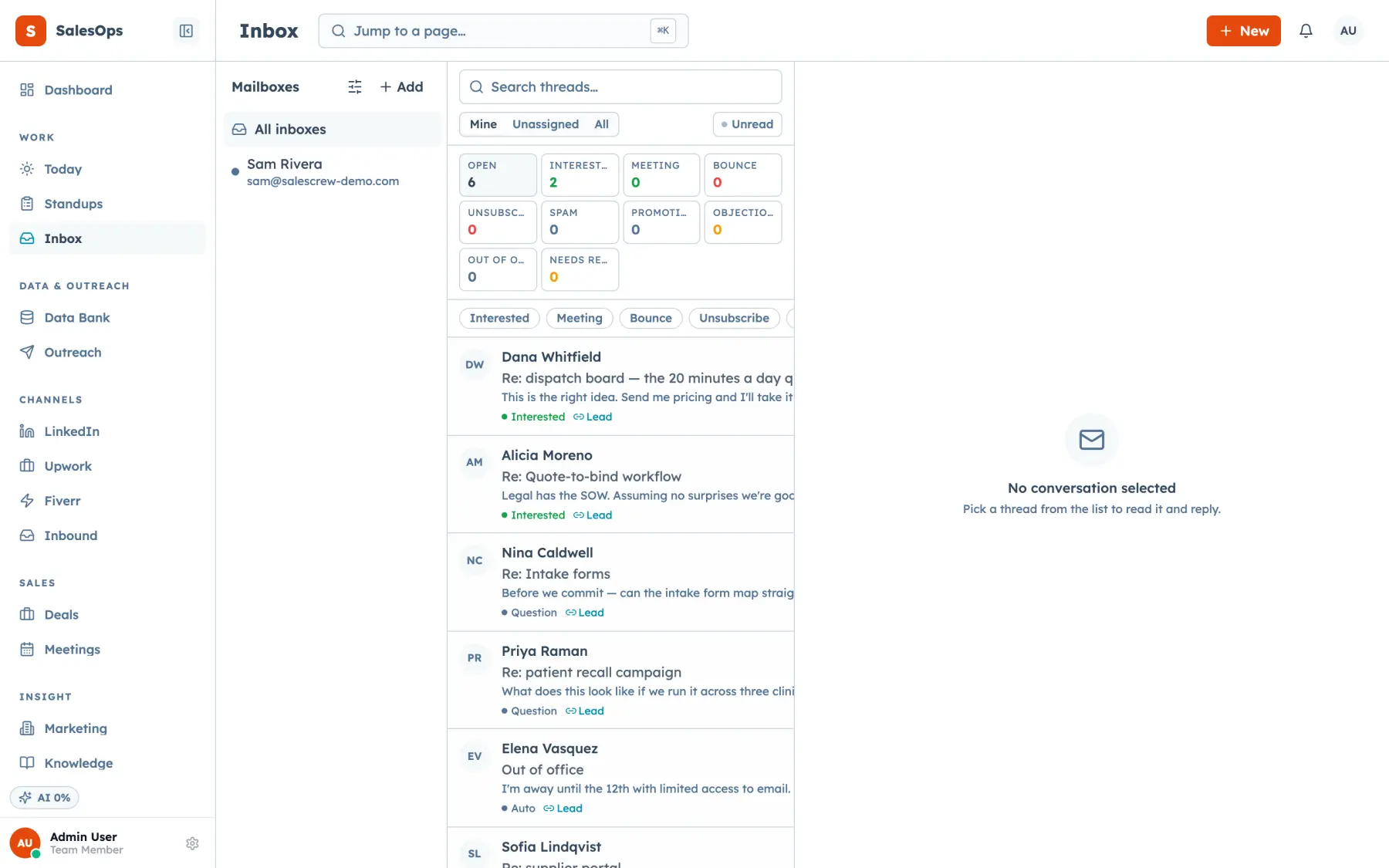
Disclosure: SalesCrew is our product. It supports white-label branding for agencies that want a client-facing product feel without building their own CRM. Its snapshot and MCP tooling give an agency room to configure and automate a lot without writing custom software. It does not replace a genuinely unmet, validated need for custom software. That is a separate decision an agency makes with its own market in mind.
Software maintenance does not stop when client revenue is slow
Questions
- What is the difference between building a small internal tool and building software to sell?
- A big one. An internal tool only needs to work for the agency's own team and can tolerate rough edges. Software sold or given to clients needs support, documentation, security review, and ongoing maintenance, whether or not it earns direct revenue. That is a very different commitment.
- Is white-labeling an existing tool a middle ground between building and reselling as-is?
- Yes, and it is a common one. White-labeling gives an agency its own branding and a client-facing product feel without the engineering investment or maintenance burden of building and running software from scratch.
- When does building software eventually make sense for an agency?
- Typically only once a very specific, repeated need has been proven across many clients over a long period, and existing tools genuinely cannot serve it. Not as a way to differentiate a still-young agency.