How to set up a shared sales inbox
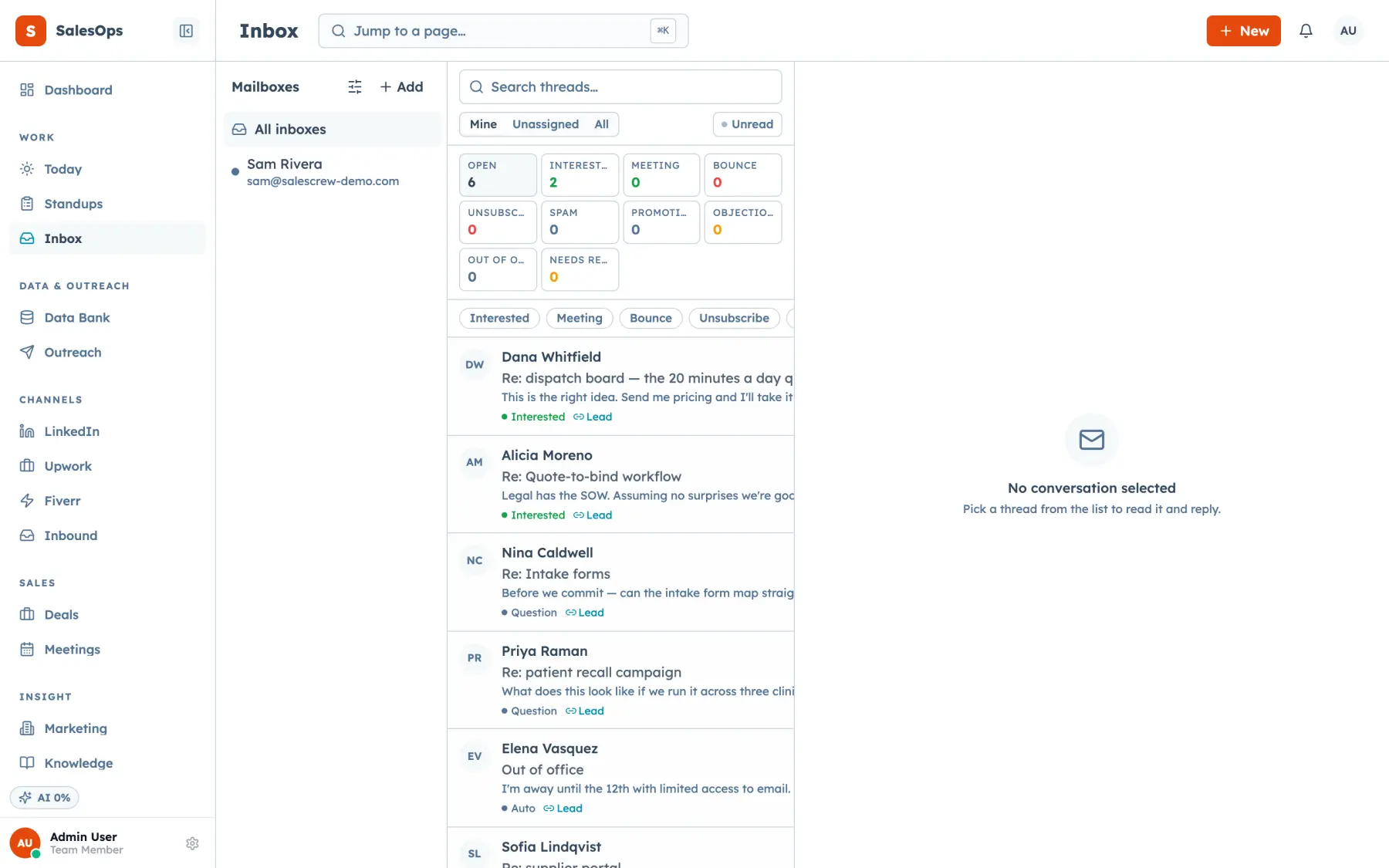
Assignment, SLA tracking, and clear reply ownership are what make a shared inbox work. Several people logged into the same mailbox solves visibility, not ownership.
The short answer
- A working shared inbox needs assignment (who is handling a specific thread), not only shared visibility. Without it, two people can reply to the same message, or both assume the other is handling it.
- An SLA, a defined maximum time before a message should be flagged or escalated, matters for a sales inbox specifically. Inbound interest can go cold within hours, not days.
- Whether every team member sees every thread depends on team size. Small teams generally benefit from full visibility. Larger teams sometimes need visibility scoped by category or owner to keep the inbox usable.
- A shared inbox without a snooze or defer function tends to pile up messages that are not urgent right now but still need a follow-up later. They clutter the active view for everyone.
Why 'everyone has the login' is not a shared inbox
The simplest version of a shared inbox is giving several people the login for the same email account. This provides visibility. Anyone can see what has come in. It does nothing to establish ownership of any thread. Without a way to mark who is handling a message, two people can respond to the same email independently. That reads as disorganized to whoever receives both. Or worse, everyone assumes someone else has it and no one replies.
A working shared inbox layers assignment on top of shared access. A thread gets assigned to a specific person, visible to the rest of the team, so it is clear at a glance who owns the next response. This does not require every message to be assigned by hand before anyone can reply. It means the system tracks who is currently responsible, updating as ownership changes.
An SLA adds the second layer that matters for sales. Inbound interest, a reply to a cold email, a form fill, a booking inquiry, decays quickly. A message sitting unanswered for two days has a much lower chance of converting than one answered within the hour. An SLA gives the team a concrete threshold, so a slow response gets flagged before the opportunity has cooled.
What a working shared inbox needs
| Element | Why it matters |
|---|---|
| Thread assignment | Prevents duplicate replies and dropped ownership |
| SLA / response time tracking | Surfaces slow responses before the opportunity goes cold |
| Snooze or defer | Keeps non-urgent messages from cluttering the active view |
| Visibility scoped to team size | Full visibility for small teams; scoped by category or owner for larger ones |
| Suppression on unsubscribe/bounce | Keeps the shared inbox's outbound side compliant automatically |
What to actually set up first
Start with assignment and an SLA before more advanced features like automated classification. A shared inbox with clear ownership and a response-time threshold, even without automation, outperforms one with sophisticated routing but no clarity on who owns each thread. Add snooze and scoped visibility once the basic ownership model works reliably.
Decide early who covers the inbox during a team member's absence. An owned thread with no one available to act on it defeats the purpose of assigning ownership. A simple backup rule, a named second person for each mailbox or category who checks in during someone's time off, closes this gap without a more complex system. It stops one person's vacation becoming a silent SLA breach for the threads they own.
Disclosure: SalesCrew is our product. Its shared inbox supports threads, drafts, snooze and SLA tracking across a mailbox connected for several team members, with rule-based classification to help triage incoming messages. It does not decide your team's ownership model. Whether visibility is full or scoped is a setting your team configures based on its own size and structure.
A silent SLA breach is worse than no SLA at all
Questions
- Is a shared inbox just multiple people logged into the same email account?
- Not if it is working well. Several people with access to the same login solves visibility but not ownership. Without a way to see who is handling a given thread, two people can reply to the same message. Or worse, both assume the other is handling it.
- What is an SLA in the context of a shared sales inbox?
- A defined maximum time a message should sit unanswered before it is flagged or escalated. For a sales inbox it is commonly measured in hours, given how quickly inbound interest can go cold. Without an SLA, there is no clear threshold for when a slow response becomes a problem.
- Should every team member see every thread in a shared inbox?
- Usually yes for a small sales team. Visibility helps catch dropped threads. Larger teams sometimes scope visibility by category or account owner, to stop the inbox becoming too noisy for any one person to track.