How to sell AI to a sceptical client
Lead with how mistakes get caught, not with what the AI can do. A sceptical client is usually afraid of losing control, and a demo of impressive output does not address that fear at all.
The short answer
- A client's scepticism about AI is most often a loss-of-control fear. Worry about a mistake reaching a customer, or an action happening without anyone noticing. Not doubt that the AI can perform the task.
- Demonstrating raw AI capability (a slick output, an impressive demo) does not address a control fear. The fear was never about capability in the first place.
- Explaining the control mechanism specifically, what a human reviews before anything goes out, what triggers a stop, what gets logged, tends to be more persuasive to a sceptical buyer than any description of what the AI can produce.
- A smaller, scoped pilot with a clearly reviewable output lets a sceptical client see the control mechanism working directly. That is usually more convincing than a sales conversation alone.
Why capability demos often fail with a sceptical buyer
The default sales instinct when a client is sceptical about AI is to show what the AI can do. An impressive output, a fast turnaround, a well-written draft. This tends to fall flat with a genuinely sceptical buyer. Their scepticism is usually not about whether AI can do the work. It is about what happens when it does not. Does a mistake reach a real customer? Does an action get taken with no one aware it happened? Does the team lose visibility into what is going on inside the process?
A capability demo does nothing to answer that concern. It can even amplify it. An impressively autonomous-looking demo reinforces the image of something acting without oversight. The more effective approach answers the control question directly and early. What stops a bad output from reaching a customer? Who reviews it? What gets logged? What happens if something does go wrong?
What a sceptical client is usually worried about, and what actually answers it
| Underlying worry | What does not help | What actually helps |
|---|---|---|
| A mistake reaches a real customer | A demo of high-quality AI output | A clear description of the human review step before anything sends |
| Something happens with no visibility | A claim that the AI is reliable | A logged audit trail of every action taken |
| Loss of control over the process | Reassurance without specifics | A named kill switch or mode that stops everything immediately |
| Scale of risk if something goes wrong | A large, all-at-once rollout | A small, scoped pilot with a clearly reviewable output |
What to actually do in the sales conversation
Ask directly what worries the client about AI, rather than assuming it is a general resistance to the technology. The answer is usually more specific than "I don't trust AI". It is closer to a particular failure they have heard about or experienced elsewhere. Address that specific concern with the mechanism that prevents it. Offer a smaller first step that lets them see the mechanism in action before committing further.
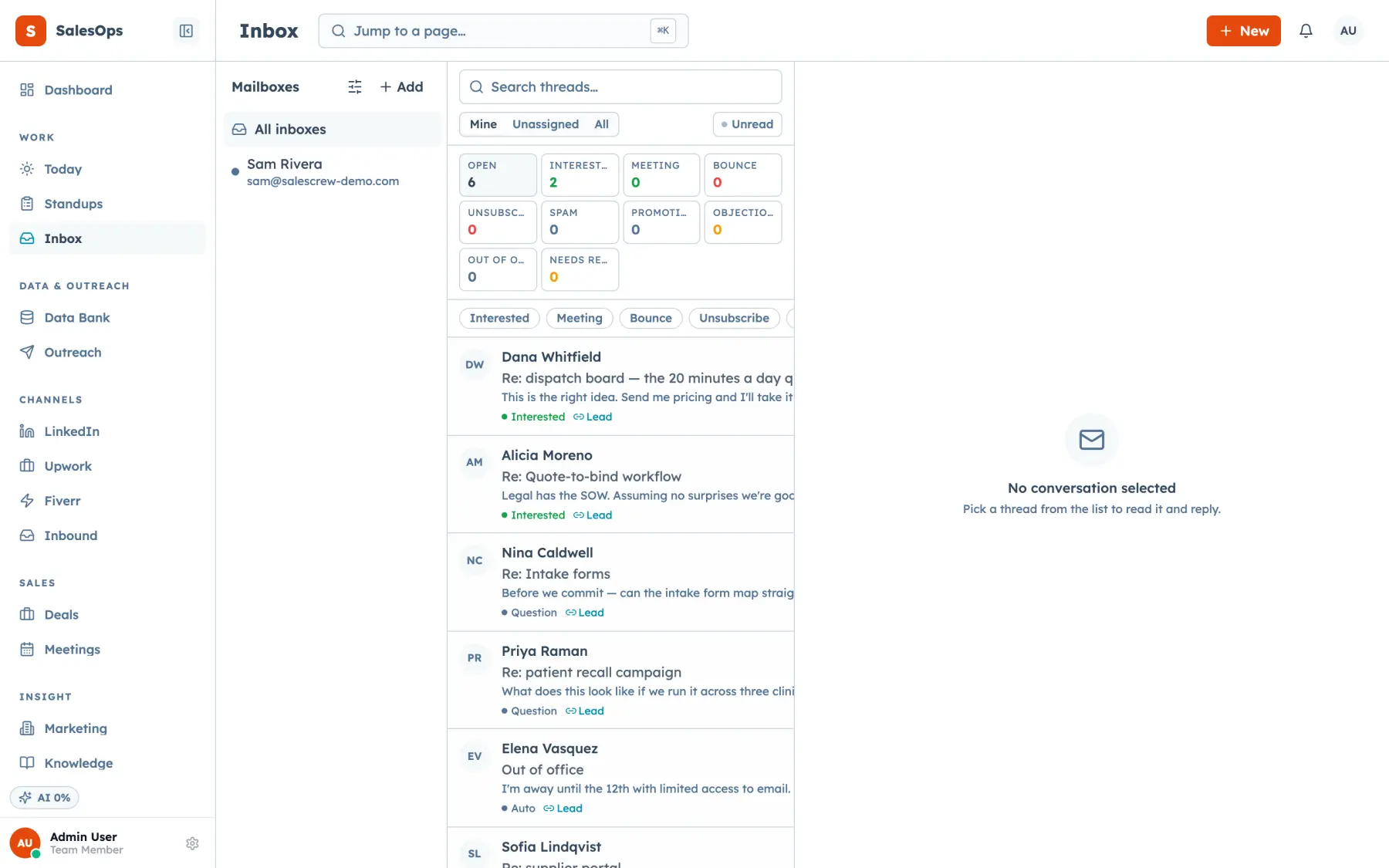
Disclosure: SalesCrew is our product. Every AI agent ships in review mode by default. It drafts an action and queues it for a human to approve, edit, or reject before anything external happens. Every tool call is written to an audit log with the actor recorded. A kill switch stops every agent from one control on the Agents page. This describes the product's control mechanism. It does not itself convince a sceptical client. That conversation still needs to happen directly.
Overpromising reliability erodes trust faster than being upfront about limits
Questions
- What is usually behind a client's scepticism about AI specifically?
- Most often a loss-of-control fear. Worry that AI will make a mistake, send something embarrassing, or act without anyone noticing until it is too late. A demo of raw AI capability does not address this, because the fear is not about whether AI can do the task well.
- Should you promise a sceptical client that AI will not make mistakes?
- No. A realistic promise, that mistakes are caught before they reach a customer because a human reviews the output first, is more credible and more honest than a claim of perfection that will eventually be tested by a real error.
- Is a smaller pilot a good way to address scepticism?
- Often yes. A scoped pilot with a defined, reviewable output lets a sceptical client see the control mechanism working in practice before committing to a broader rollout. That tends to be more persuasive than any amount of description in a sales conversation.